Fast delivery within 24 hours Integrated customer cloud for digital parts Over 2,000 orchestral works in the catalogue Personal advice — orch@bnote.de SOS +++ EMERGENCY PARTS SERVICE Distribution for renowned partner publishers Online tool for pre-print string annotations Fast delivery within 24 hours Integrated customer cloud for digital parts Over 2,000 orchestral works in the catalogue Personal advice — orch@bnote.de SOS +++ EMERGENCY PARTS SERVICE Distribution for renowned partner publishers Online tool for pre-print string annotations
🔑 Log in 📝 Become a customer
Kat. #BO-6696  ·  B-NOTE Curated Edition i
Editions & prices
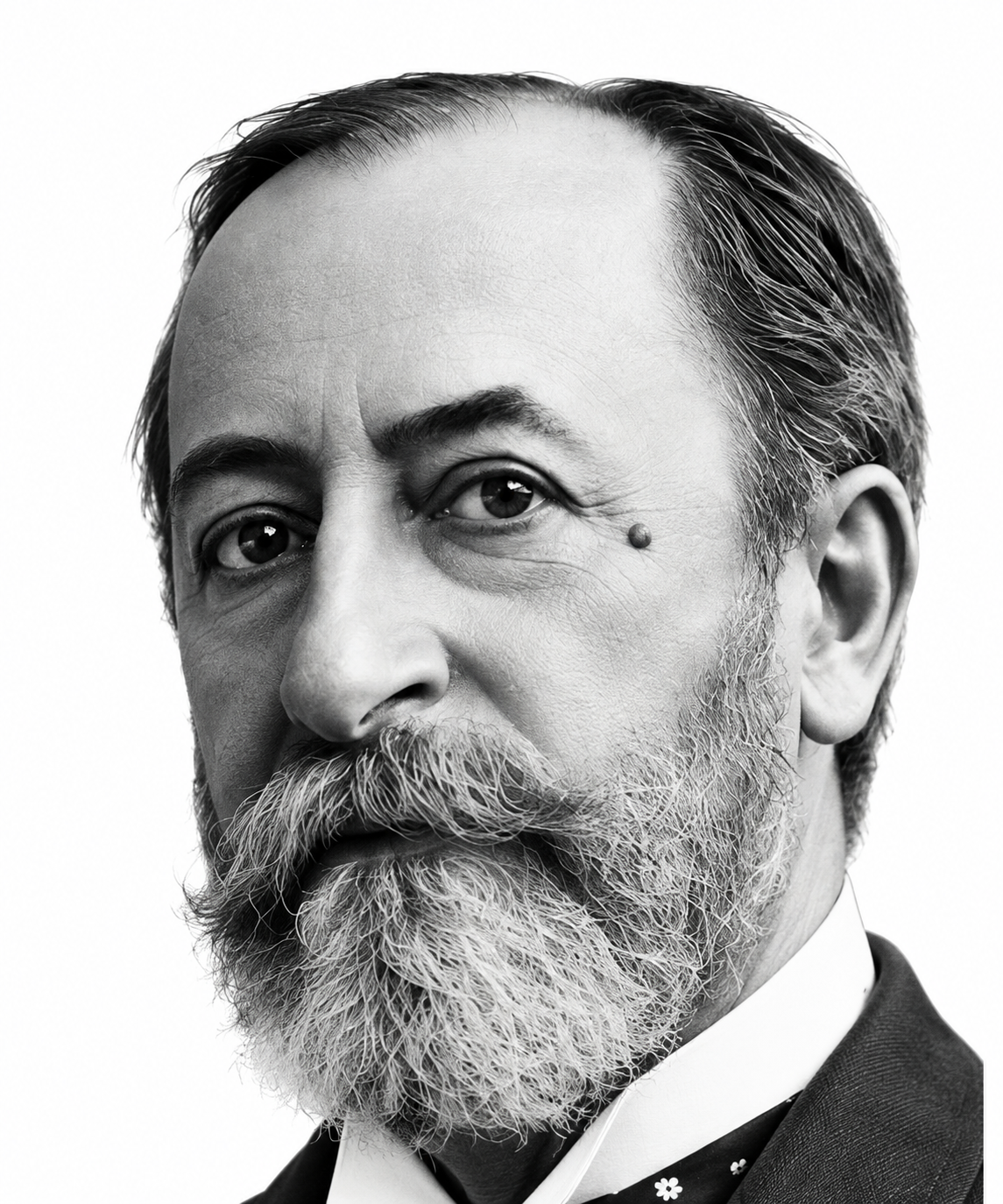
Saint-Saëns, Camille

Danse macabre for orchestra

Symphonic poem based on a poem by Henri Cazalis
B-Note says:“Saint-Saëns puts a detuned solo violin at the helm of a nocturnal danse macabre — a cornerstone of French orchestral program music.”
Opus
op.40
Composed
1874
Duration
ca. 7:45 min
First publisher
CC 2009
Instrumentation
2+1.2.2.2 / 4.2.3.1 / timp, perc, hp, str i
Woodwinds
Flutes2+1
Oboes2
Clarinets2
Bassoons2
Brass
Horns4
Trumpets2
Trombones3
Tuba1
Further timp Timpani · perc Percussion · hp Harp · str Strings
+1 = additional player on an auxiliary instrument (e.g. piccolo, cor anglais, bass clarinet, contrabassoon)
Orchestra
Symphony orchestra
Your orchestra Available to registered customers only i Your orchestra Save your orchestra’s line-up once – by drag & drop or from a template, from chamber to full symphony orchestra. Fits – no extra players needed Nearly – additionally: 1 harp 5 extra players needed Every work page then shows at a glance whether the work fits your orchestra and which extra players you would need. Several orchestras and project line-ups are possible. The catalogue is aimed at orchestras and ensembles – once logged in, the feature is available under "My orchestra". Log in →
Output: Creative Commons by "Le Philhar" (curated)

Camille Saint-Saëns composed his symphonic poem “Danse macabre”, Op. 40, in 1874 – a work that ranks among the most distinctive contributions to French orchestral literature of the late nineteenth century. It stands as a prime example of Saint-Saëns' efforts to establish and develop the tone poem, a genre shaped by Franz Liszt, within a French context.

In terms of sound, the work captivates through its atmospheric density and its unmistakable inventiveness in instrumentation. The solo violin, whose strings are specially detuned, lends the piece a ghostly, grotesque character. The sound of the full orchestra shifts between dance-like lightness and sombre weight – a play of contrasts that Saint-Saëns handles with consummate skill.

The work reflects the taste for programmatic content and coloristic refinement so typical of French music of the era, without sacrificing symphonic rigour. Combining vivid pictorial imagery with technical precision, “Danse macabre” is regarded as one of the most popular works in its genre and as a key piece in Saint-Saëns' output.

„The piece caused an absolute uproar; death fiddling on his grave, skeletons dancing about — it was all too much for the audience, who turned up their noses at it.“
— Le Ménestrel, Konzertbericht zur Uraufführung der „Danse Macabre" unter Édouard Colonne, Paris, Januar 1875
Date
24. Januar 1875
Venue
Paris, Salle du Châtelet (Concert Colonne)
Conductor
Édouard Colonne
Orchestra
Concerts Colonne (Association Artistique)
"Danse Macabre," Op. 40, began life in 1872 as a song for voice and piano, set to a poem by Henri Cazalis, before Saint-Saëns reworked it in 1874 as a symphonic poem. The premiere caused a stir and stirred controversy: the use of a solo violin tuned down by a half step on the E string to evoke the sound of a skeleton scraping away at a fiddle, along with the quotation of the "Dies Irae," was considered daring and drew sharp criticism from more conservative quarters. With audiences, however, it was an immediate hit, and it went on to become one of Saint-Saëns' best-known works. The premiere took place as part of the concert series that Édouard Colonne had founded in 1873, still in its early days at the time, with a mission to champion French music.

Editions available

Item no. Description Price (incl. 7% VAT)
BO-6696.00Full score
€ 36,80
BO-6696.10Set of parts with strings 5.4.3.2.2
€ 140,00
🎵 Digital options

Digital parts for this edition are not yet available. Please log in to request digitization.

BO-6696.21Extra Str. Vl.1€ 5,80
BO-6696.22Extra Str. Vl.2€ 5,80
BO-6696.23Extra Str. Va.€ 5,80
BO-6696.24Extra Str. Vc.€ 5,80
BO-6696.25Extra Str. Bass€ 5,80

All prices include statutory VAT, plus shipping (digital editions: no shipping).

Sample pages

Not yet available

Video

CC
Curated edition: This edition is based on public domain material that can be used freely. The publisher has compared the edition with the original sources and, where necessary, corrected, supplemented or improved it for practical use in performances.

CC
Curated edition

This edition is based on public domain material that can be used freely. The publisher has compared the edition with the original sources and, where necessary, corrected, supplemented or improved it for practical use in performances.

More by Camille Saint-Saëns

🎵 Request digital parts

The parts for this work are not yet available as digital files. You can request digitization here. Please briefly indicate which parts you need and by when they should be delivered. Please note that we explicitly cannot guarantee the delivery of digital parts. You will be promptly informed about the planned availability.

ⓘ PLEASE NOTE THAT DIGITAL PARTS ARE ONLY AVAILABLE IN ADDITION TO PRINTED PARTS.

Please log in to submit a request.