Fast delivery within 24 hours Integrated customer cloud for digital parts Over 2,000 orchestral works in the catalogue Personal advice — orch@bnote.de SOS +++ EMERGENCY PARTS SERVICE Distribution for renowned partner publishers Online tool for pre-print string annotations Fast delivery within 24 hours Integrated customer cloud for digital parts Over 2,000 orchestral works in the catalogue Personal advice — orch@bnote.de SOS +++ EMERGENCY PARTS SERVICE Distribution for renowned partner publishers Online tool for pre-print string annotations
🔑 Log in 📝 Become a customer
Kat. #BO-6584  ·  B-NOTE
Editions & prices
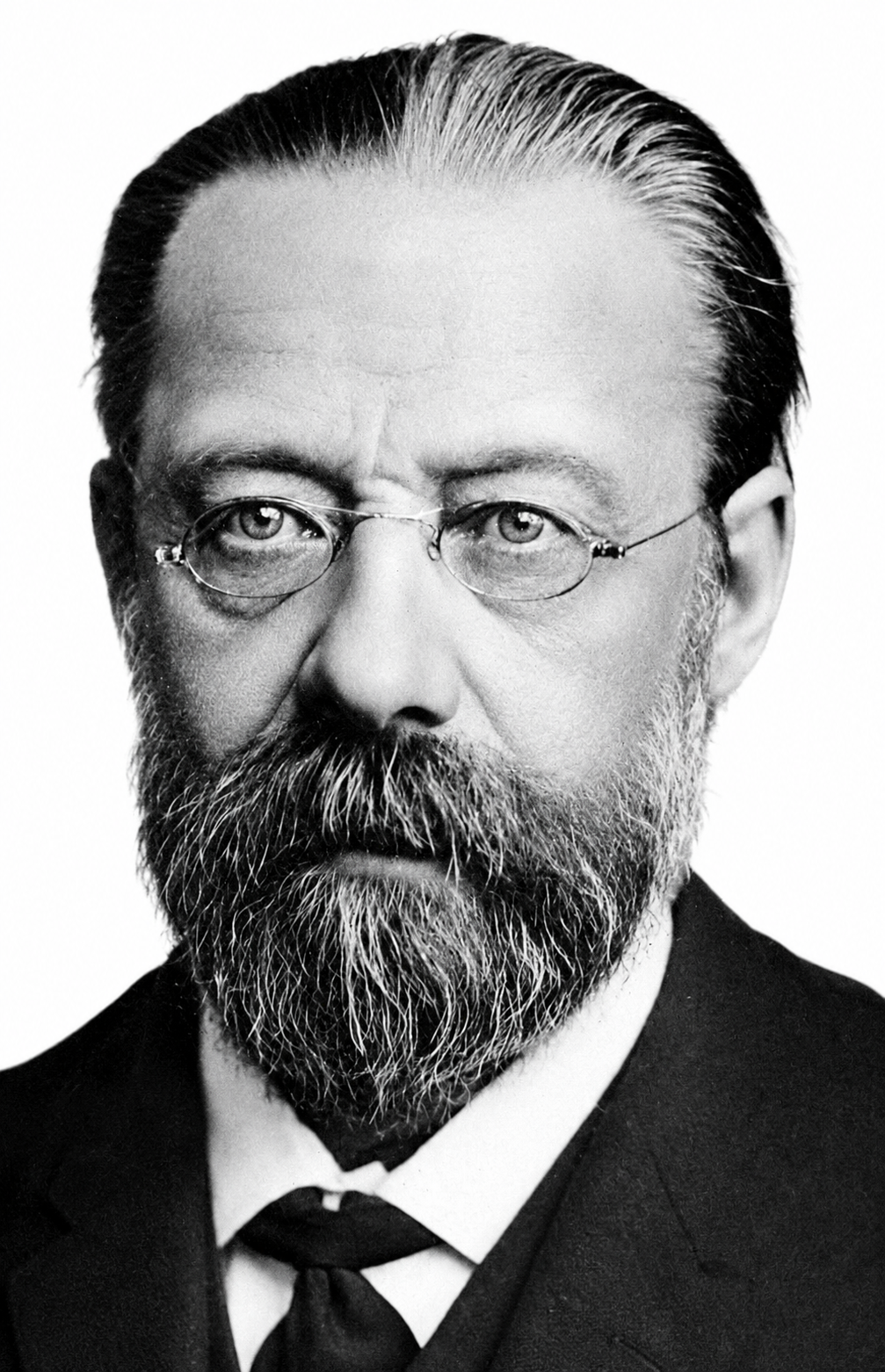
SMETANA, Bedrich

The Moldau (Vltava)

from "My Homeland" (Ma Vlast)
B-Note says:“From two quiet sources, a torrent is born: Smetana's masterpiece unleashes the full force of an orchestra to capture the dramatic soul of a nation.”
Opus
JB 1:112/2
Key
G minor
Composed
1874
Duration
ca. 12:00 min
First publisher
1910, Breitkopf & Härtel, Leipzig
Instrumentation
2+1.2.2.2 / 4.2.3.1 / timp, perc, hp, str i
Woodwinds
Flutes2+1
Oboes2
Clarinets2
Bassoons2
Brass
Horns4
Trumpets2
Trombones3
Tuba1
Further timp Timpani · perc Percussion · hp Harp · str Strings
+1 = additional player on an auxiliary instrument (e.g. piccolo, cor anglais, bass clarinet, contrabassoon)
Orchestra
Symphony orchestra
Your orchestra Available to registered customers only i Your orchestra Save your orchestra’s line-up once – by drag & drop or from a template, from chamber to full symphony orchestra. Fits – no extra players needed Nearly – additionally: 1 harp 5 extra players needed Every work page then shows at a glance whether the work fits your orchestra and which extra players you would need. Several orchestras and project line-ups are possible. The catalogue is aimed at orchestras and ensembles – once logged in, the feature is available under "My orchestra". Log in →

The Moldau is the second and most celebrated movement of the symphonic cycle My Homeland (Má vlast), which Smetana composed between 1872 and 1879. The work was written in 1874 – at a time when the composer had already lost his hearing entirely – and is considered one of the most distinctive examples of musical nationalism in nineteenth-century Bohemia.

In terms of sound, the tone poem combines a Romantic orchestral language with folk music elements and a vivid pictorial imagination. The instrumentation – featuring harp, woodwinds, strings, and a powerful brass section – creates a symphonic palette capable of conveying both lyrical expansiveness and dramatic intensity. In this respect, The Moldau stands as a prime example of the late Romantic tone poem in the Central European tradition, of the kind also found in Dvořák and Liszt.

As part of a national large-scale work, the tone poem carries a deliberately identity-forming function: it anchors the landscape and history of Bohemia within the concert repertoire and makes Czech national consciousness tangible through music. To this day, the work remains one of the most frequently performed orchestral pieces of the nineteenth century and an indispensable part of the standard late Romantic repertoire.

„The composition depicts the course of the Vltava, from its beginnings as two small springs, one cold and one warm, through their joining together to form a single river, flowing on through forests and meadows, through countryside where a village wedding is in full swing, past water nymphs dancing in the moonlight, while proud castles, manor houses and ruins are reflected in its waters. The Vltava rushes through the St. John's Rapids, then rolls on as a broad river toward Prague Castle, finally disappearing majestically into the Elbe.“
— Smetana, Bedřich: eigene Programmbeschreibung zu „Die Moldau", niedergeschrieben anlässlich der Uraufführung (1875); überliefert u. a. in: Brian Large, „Smetana", Duckworth, London 1970, sowie im Booklet der Einspielung Rafael Kubelík / Bayerisches Rundfunkorchester, Deutsche Grammophon 1984
Date
4. April 1875
Venue
Prag, Sophiensaal (Žofín)
Conductor
Bedřich Smetana
Orchestra
Orchester der Prager Philharmonischen Gesellschaft
"The Moldau" (Czech: "Vltava") is the second and most celebrated piece in the symphonic cycle "Má vlast" (My Homeland) and received its premiere together with the first piece, "Vyšehrad." Smetana had completed the composition on December 8, 1874, at a time when he had already lost his hearing entirely. He therefore experienced the premiere without any acoustic perception whatsoever, yet conducted the concert himself. The work depicts the course of the Vltava River from its sources to where it flows into the Elbe, and it quickly became the most frequently performed piece in the entire cycle.

Editions available

Item no. Description Price (incl. 7% VAT)
BO-6584.00Full score
1910, Breitkopf & Härtel, Leipzig
€ 19,80
BO-6584.01Large conductor's score A3
1910, Breitkopf & Härtel, Leipzig
€ 54,80
BO-6584.10Set of parts with strings 5.4.3.2.2
1910, Breitkopf & Härtel, Leipzig
€ 135,00
🎵 Digital options

Digital parts for this edition are not yet available. Please log in to request digitization.

BO-6584.21Extra Str. Vl.1€ 4,50
BO-6584.22Extra Str. Vl.2€ 4,50
BO-6584.23Extra Str. Va.€ 4,50
BO-6584.24Extra Str. Vc.€ 4,50
BO-6584.25Extra Str. Bass€ 4,50

All prices include statutory VAT, plus shipping (digital editions: no shipping).

Sample pages

Not yet available

Video

More by Bedrich Smetana

🎵 Request digital parts

The parts for this work are not yet available as digital files. You can request digitization here. Please briefly indicate which parts you need and by when they should be delivered. Please note that we explicitly cannot guarantee the delivery of digital parts. You will be promptly informed about the planned availability.

ⓘ PLEASE NOTE THAT DIGITAL PARTS ARE ONLY AVAILABLE IN ADDITION TO PRINTED PARTS.

Please log in to submit a request.