Fast delivery within 24 hours Integrated customer cloud for digital parts Over 2,000 orchestral works in the catalogue Personal advice — orch@bnote.de SOS +++ EMERGENCY PARTS SERVICE Distribution for renowned partner publishers Online tool for pre-print string annotations Fast delivery within 24 hours Integrated customer cloud for digital parts Over 2,000 orchestral works in the catalogue Personal advice — orch@bnote.de SOS +++ EMERGENCY PARTS SERVICE Distribution for renowned partner publishers Online tool for pre-print string annotations
🔑 Log in 📝 Become a customer
Kat. #BO-7351  ·  Serenissima Music Inc. Distribution: B-NOTE
Editions & prices
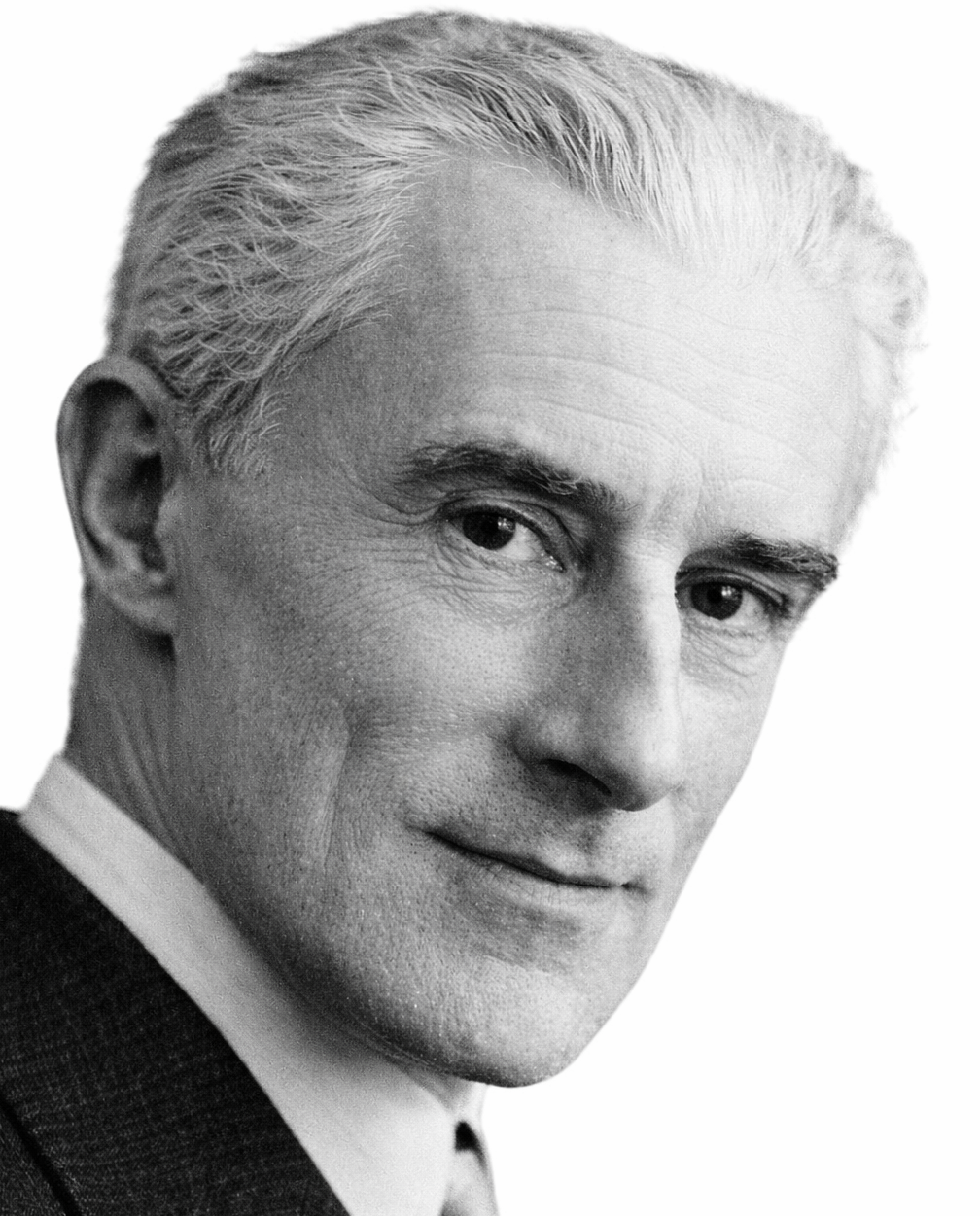
Ravel, Joseph-Maurice

Tombeau de Couperin suite, M.90 (NCPE. Nieweg, Bradburd)

B-Note says:“Individual movements pay tribute to fallen soldiers of World War I — Ravel channels grief into stylized grace and formal clarity.”
Opus
M.90
Composed
1919
Duration
ca. 17:00 min
First publisher
Durand, Paris, 1919
Reprint publisher
Serenissima Music, Edwardsville, 1995
Can be combined with i Can be combined with This reprint edition is based on the same editorial source as the editions listed here. The materials can therefore be combined with one another.
Durand 9794
Kalmus A8064
Luck's Music 09297
Instrumentation
2d1.2d1.2.2 / 2.1.0.0 / hp i
Woodwinds
Flutes2d1
Oboes2d1
Clarinets2
Bassoons2
Brass
Horns2
Trumpets1
Trombones0
Tuba0
Further hp Harp
d = doubling, e.g. 2d1: one of the two players also plays the auxiliary instrument
Orchestra
Symphony orchestra
Your orchestra Available to registered customers only i Your orchestra Save your orchestra’s line-up once – by drag & drop or from a template, from chamber to full symphony orchestra. Fits – no extra players needed Nearly – additionally: 1 harp 5 extra players needed Every work page then shows at a glance whether the work fits your orchestra and which extra players you would need. Several orchestras and project line-ups are possible. The catalogue is aimed at orchestras and ensembles – once logged in, the feature is available under "My orchestra". Log in →

Maurice Ravel's “Le Tombeau de Couperin” was completed in 1919 as an orchestral arrangement of a suite he had originally composed for piano. The work stands among the finest examples of French neoclassicism: Ravel draws on the forms and spirit of Baroque music—most notably that of the great French harpsichord master François Couperin—and refracts them through his unmistakable harmonic sophistication and Impressionist sound world.

The orchestral version is distinguished by its chamber-like transparency and extraordinarily precise instrumentation. Ravel employs a small ensemble in which the woodwinds and harp take on a central role, while the string forces are kept lean. This scoring lends the work a lucid, almost fragile texture that matches the clarity of its Baroque model without ever simply copying it.

“Le Tombeau de Couperin” was written during a period of profound personal grief: several movements of the piano version are dedicated to friends who fell in the First World War. That the work nonetheless—or perhaps for that very reason—maintains an air of elegant composure and stylised grace is regarded as characteristic of Ravel's tendency to transform mourning into formal beauty. In this respect the piece stands as an exemplary expression of early French modernism poised between tradition and renewal.

„Each movement of "Le Tombeau de Couperin" is dedicated to the memory of a friend who fell in the war. I say a friend — and yet it is perhaps less a tribute to any one individual than to the French spirit itself.“
— Maurice Ravel, in: Ravel in his own Words (hrsg. von Arbie Orenstein, Letters, Articles, Interviews, 1990), dokumentiertes Interview mit The Musical Digest, 1928
„"Le Tombeau de Couperin" is not so much a tribute to Couperin alone as it is a homage to the whole of eighteenth-century French music.“
— Maurice Ravel, zitiert in: Roland-Manuel, „À la gloire de Ravel" (1938), autorisierte Biografie, gestützt auf persönliche Gespräche mit dem Komponisten
Date
28. Februar 1920
Venue
Paris, Salle Gaveau
Conductor
Rhené-Baton (René Emmanuel Baton)
Orchestra
Concerts Pasdeloup
The orchestral version of Le Tombeau de Couperin was completed in 1919, adapted from the piano suite of the same name (1914–1917), with Ravel choosing to orchestrate only four of the six movements: the Prélude, Forlane, Menuet, and Rigaudon. In the original piano version, each movement had been dedicated to a friend of Ravel's who had fallen in the First World War, and this commemorative spirit carries over into the orchestral score, lending added weight to the title word "tombeau" (literally "tomb," but in musical tradition a memorial piece or tribute): the work at once honors the Baroque composer François Couperin and stands as a personal remembrance of those lost in the war.

Editions available

Item no. Description Price (incl. 7% VAT)
SER-12177.00Full score
Durand, Paris, 1919
€ 48,00
SER-12184.10Set of parts with strings 4.4.3.2.2
Durand, Paris, 1919
€ 155,00
🎵 Digital options

Digital parts for this edition are not yet available. Please log in to request digitization.

SER-12184.21Extra Str. Vl.1€ 6,00
SER-12184.22Extra Str. Vl.2€ 6,00
SER-12184.23Extra Str. Va.€ 6,00
SER-12184.24Extra Str. Vc.€ 6,00
SER-12184.25Extra Str. Bass€ 6,00
SER-12184.12Wind parts
Durand, Paris, 1919
€ 64,00

All prices include statutory VAT, plus shipping (digital editions: no shipping).

Sample pages

Sample pages Sample pages

Video

More by Joseph-Maurice Ravel

All 21 works by Ravel →

🎵 Request digital parts

The parts for this work are not yet available as digital files. You can request digitization here. Please briefly indicate which parts you need and by when they should be delivered. Please note that we explicitly cannot guarantee the delivery of digital parts. You will be promptly informed about the planned availability.

ⓘ PLEASE NOTE THAT DIGITAL PARTS ARE ONLY AVAILABLE IN ADDITION TO PRINTED PARTS.

Please log in to submit a request.