Fast delivery within 24 hours Integrated customer cloud for digital parts Over 2,000 orchestral works in the catalogue Personal advice — orch@bnote.de SOS +++ EMERGENCY PARTS SERVICE Distribution for renowned partner publishers Online tool for pre-print string annotations Fast delivery within 24 hours Integrated customer cloud for digital parts Over 2,000 orchestral works in the catalogue Personal advice — orch@bnote.de SOS +++ EMERGENCY PARTS SERVICE Distribution for renowned partner publishers Online tool for pre-print string annotations
🔑 Log in 📝 Become a customer
Kat. #BO-6585  ·  B-NOTE
Editions & prices
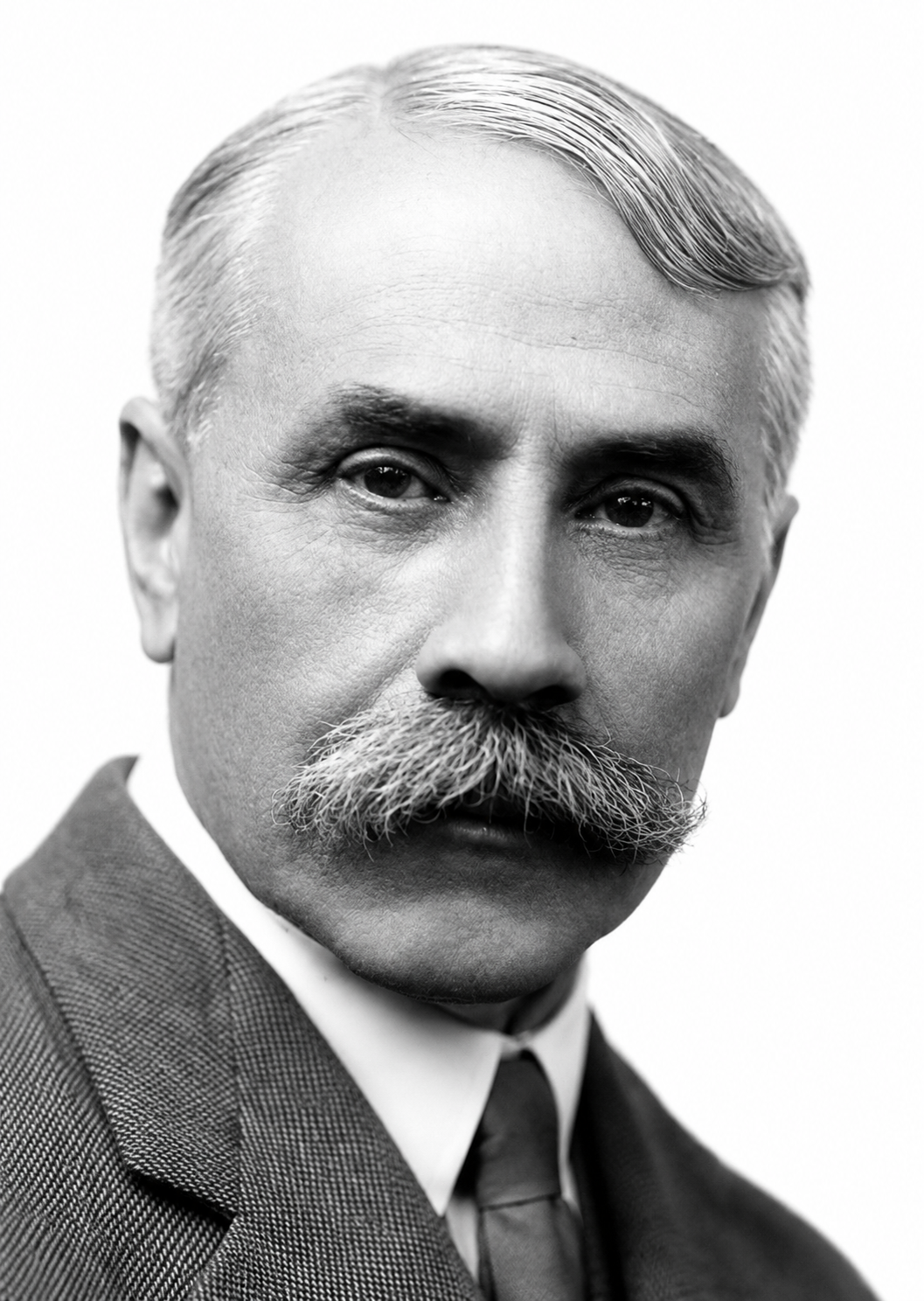
ELGAR, Edward

Pomp and Circumstance March Nr. 1

B-Note says:“Festive splendor, rhythmic drive, and an immortal melody: "Pomp and Circumstance No. 1" is the sound of the Edwardian age in full glory.”
Opus
op.39/1
Key
D major
Composed
1901
Duration
ca. 6:00 min
First publisher
1904, Boosey, London
Instrumentation
2+2.2.2+1.2+1 / 4.3.3.1 / timp, perc, hp, org, str i
Woodwinds
Flutes2+2
Oboes2
Clarinets2+1
Bassoons2+1
Brass
Horns4
Trumpets3
Trombones3
Tuba1
Further timp Timpani · perc Percussion · hp Harp · org Organ · str Strings
+1 = additional player on an auxiliary instrument (e.g. piccolo, cor anglais, bass clarinet, contrabassoon)
Orchestra
Symphony orchestra
Your orchestra Available to registered customers only i Your orchestra Save your orchestra’s line-up once – by drag & drop or from a template, from chamber to full symphony orchestra. Fits – no extra players needed Nearly – additionally: 1 harp 5 extra players needed Every work page then shows at a glance whether the work fits your orchestra and which extra players you would need. Several orchestras and project line-ups are possible. The catalogue is aimed at orchestras and ensembles – once logged in, the feature is available under "My orchestra". Log in →
contains the trio „Land of hope and glory“

Edward Elgar's first Pomp and Circumstance March in D major, composed in 1901, ranks among the most celebrated orchestral works in British musical history. With its magnificent, broadly expansive sound for large orchestra – including harp, organ, and an extended wind section – it embodies the spirit of the Edwardian age in its most representative form. The music radiates that self-assured grandeur which Elgar, more than any other composer of his time, knew how to translate into orchestral language.

The work belongs to the core repertoire of late British Romanticism and stands as a prime example of Elgar's ability to unite popular accessibility with masterly orchestration. The march character is consistently marked by rhythmic energy and festive brilliance – hallmarks of that culture of national ceremonial which flourished in Britain around 1900.

The work owes its particular fame to its trio, which under the title Land of Hope and Glory rose to become Britain's unofficial national anthem. Elgar himself is said to have regarded this melody as his most significant melodic inspiration – an assessment that is hardly surprising given its worldwide dissemination.

„I have a melody in my head that will astonish the world – something the likes of which has never been heard before.“
— Edward Elgar, Brief an August Johannes Jaeger (Novello & Co.), ca. 1901; zitiert u. a. in Jerrold Northrop Moore: „Edward Elgar: A Creative Life", Oxford University Press, 1984
„You'll write a second "God Save the King."“
— König Eduard VII. zu Edward Elgar nach der Uraufführung des „Pomp and Circumstance March Nr. 1" am 19. Oktober 1901 in Liverpool; dokumentiert in Percy M. Young: „Elgar O.M.", Collins, 1955
Date
19. Oktober 1901
Venue
Liverpool, Liverpool Philharmonic Hall
Conductor
Alfred Rodewald
Orchestra
Liverpool Philharmonic Orchestra
The march "Pomp and Circumstance No. 1" received a triumphant reception at its premiere in Liverpool, where the audience demanded an immediate encore. It was King Edward VII who encouraged Elgar to set the catchy trio theme to words, giving rise to the song "Land of Hope and Glory," which was incorporated into Elgar's Coronation Ode, Op. 44, in 1902 and went on to become England's unofficial second national anthem. Elgar himself conducted the work just a few days later, on October 22, 1901, in London with the Hallé Orchestra, where it was again met with extraordinary acclaim.

Editions available

Item no. Description Price (incl. 7% VAT)
BO-6585.00Full score
1904, Boosey, London
€ 19,80
BO-6585.01Large conductor's score A3
1904, Boosey, London
€ 54,80
BO-6585.10Set of parts with strings 5.4.3.2.2
1904, Boosey, London
€ 80,00
🎵 Digital options

Digital parts for this edition are not yet available. Please log in to request digitization.

BO-6585.21Extra Str. Vl.1€ 3,50
BO-6585.22Extra Str. Vl.2€ 3,50
BO-6585.23Extra Str. Va.€ 3,50
BO-6585.24Extra Str. Vc.€ 3,50
BO-6585.25Extra Str. Bass€ 3,50
BO-6585.31Vocal score (en)
1904, Boosey, London Land of hope and glory, SATB (Arr. Boris Hellmers)Minimum order: 16 copies
€ 2,90
BO-6585.06Lead sheet
1904, Boosey, London "Land of Hope and Glory": Melody in unison, with lyrics. Includes 20 copies; additional unlimited # of copies can be made by you.
€ 12,80

Sample pages

Not yet available

Video

More by Edward Elgar

🎵 Request digital parts

The parts for this work are not yet available as digital files. You can request digitization here. Please briefly indicate which parts you need and by when they should be delivered. Please note that we explicitly cannot guarantee the delivery of digital parts. You will be promptly informed about the planned availability.

ⓘ PLEASE NOTE THAT DIGITAL PARTS ARE ONLY AVAILABLE IN ADDITION TO PRINTED PARTS.

Please log in to submit a request.