Fast delivery within 24 hours Integrated customer cloud for digital parts Over 2,000 orchestral works in the catalogue Personal advice — orch@bnote.de SOS +++ EMERGENCY PARTS SERVICE Distribution for renowned partner publishers Online tool for pre-print string annotations Fast delivery within 24 hours Integrated customer cloud for digital parts Over 2,000 orchestral works in the catalogue Personal advice — orch@bnote.de SOS +++ EMERGENCY PARTS SERVICE Distribution for renowned partner publishers Online tool for pre-print string annotations
🔑 Log in 📝 Become a customer
Kat. #BO-6689  ·  B-NOTE
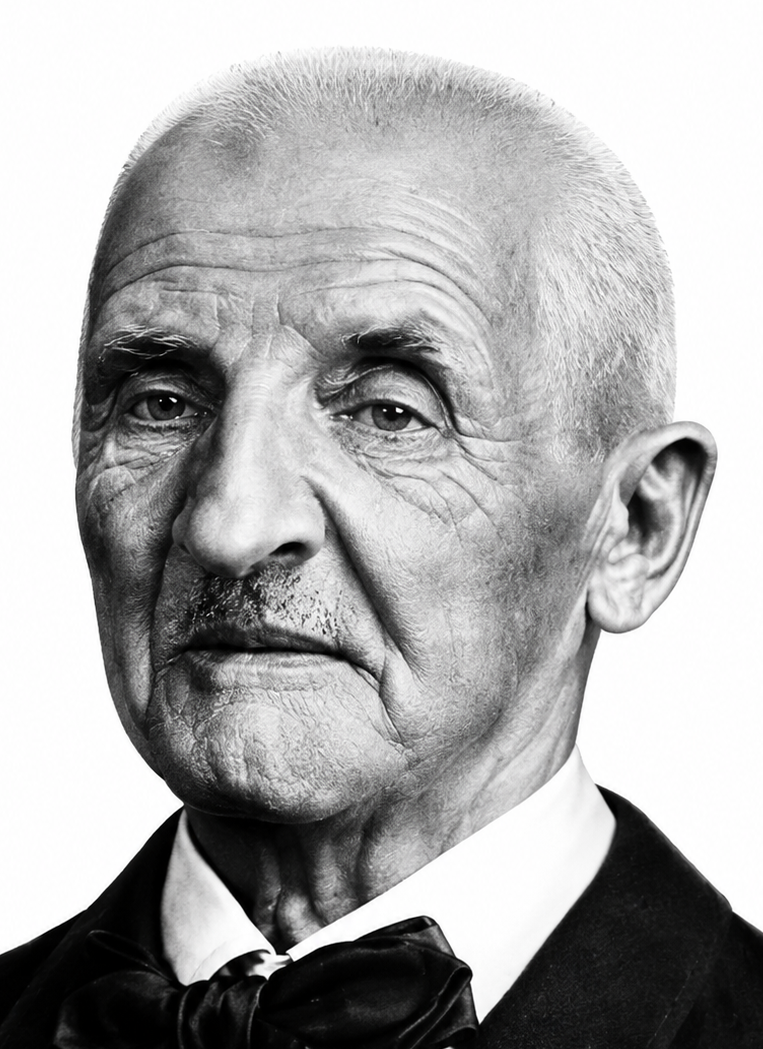
Bruckner, Anton

Symphony Nr. 4

Romantic Symphony (2nd version)
B-Note says:“With its famous horn calls and sweeping themes, Bruckner's Romantic Symphony conjures a sound world of medieval landscapes and castle imagery.”
Opus
WAB 104
Key
E-flat major
Composed
1874
Duration
ca. 1:05:00 min
First publisher
1936, Musikwissenschaftlicher Verlag, Wien
Can be combined with i Can be combined with This reprint edition is based on the same editorial source as the editions listed here. The materials can therefore be combined with one another.
Kalmus A1193
Instrumentation
2.2.2.2 / 4.3.3.1 / timp, str i
Woodwinds
Flutes2
Oboes2
Clarinets2
Bassoons2
Brass
Horns4
Trumpets3
Trombones3
Tuba1
Further timp Timpani · str Strings
Orchestra
Symphony orchestra
Your orchestra Available to registered customers only i Your orchestra Save your orchestra’s line-up once – by drag & drop or from a template, from chamber to full symphony orchestra. Fits – no extra players needed Nearly – additionally: 1 harp 5 extra players needed Every work page then shows at a glance whether the work fits your orchestra and which extra players you would need. Several orchestras and project line-ups are possible. The catalogue is aimed at orchestras and ensembles – once logged in, the feature is available under "My orchestra". Log in →
Stimmensatz zur anerkannten 1890er-Fassung der Sinfonie (Hrsg. Robert Maria Haas), in der die drei ersten Sätze aus der 1878-er Fassung mit dem Finale von 1880 kombiniert sind.


Partitur in Vorbereitung.

Anton Bruckner's Fourth Symphony in E-flat major, composed in 1874, ranks among the most frequently performed works by the Austrian composer and is widely regarded as one of the most impressive examples of late Romantic German symphonic writing. With its programmatic subtitle "Romantic" — bestowed by Bruckner himself — it evokes a world of medieval castles, woodland atmospheres, and misty landscapes, without being illustrative programme music in the strict sense.

In terms of sound, the work is shaped by Bruckner's characteristic orchestral blocks, the expansive breadth of his themes, and the distinctive interplay between powerful tutti climaxes and delicate, almost transparent passages. The horn calls of the opening have long since become a hallmark of Romantic symphonic writing. Within Austrian symphonism of the late nineteenth century, the work occupies a pivotal position — as a synthesis of Schubertian nature poetry, the Wagnerian sound ideal, and Bruckner's own deeply religious musical language.

Over the years the work underwent several revisions by the composer himself and exists in a number of versions that differ from one another in places quite substantially — a testament to Bruckner's lifelong, self-critical struggle to achieve the perfect symphonic form.

„"Medieval city - dawn - the morning watchmen's calls ring out from the city towers - the gates open - a knight on a proud steed charges out into the open - forests, the song of the woods, birdsong - and so the romantic scene continues to unfold."“
— Bruckner, Anton: schriftliche Programmerläuterung zur „Romantischen" Sinfonie Es-Dur, überliefert bei August Göllerich / Max Auer: Anton Bruckner. Ein Lebens- und Schaffensbild, Bd. IV, Regensburg 1936
„"The scherzo depicts a hunting scene: calls of the hunt ring out through the forest, and a minor adventure befalls the huntsman — the trio is the dance tune played by the musicians during a rest."“
— Bruckner, Anton: mündliche Erläuterung, überliefert durch Friedrich Klose: Meine Lehrjahre bei Bruckner. Erinnerungen und Betrachtungen, Regensburg 1927
Date
20. Februar 1881
Venue
Wien, Großer Musikvereinssaal
Conductor
Hans Richter
Orchestra
Wiener Philharmoniker
What was performed was not the original 1874 version but the substantially revised second version of 1878/80. Bruckner dedicated this version to Crown Prince Rudolf of Austria. The premiere was a tremendous success with the audience -- Bruckner was applauded after every movement and called to the stage multiple times, something highly unusual at symphony concerts of the day. The conductor Hans Richter had been a longstanding champion of Bruckner and was a staunch advocate for his works. The original 1874 version never received a public performance during Bruckner's lifetime.

Editions available

Item no. Description Price (incl. 7% VAT)
BO-6689.00Full score
€ 54,80
BO-6689.01Large conductor's score A3
€ 85,00
BO-6689.10Set of parts with strings 5.4.3.2.2
€ 335,00
🎵 Digital options

Digital parts for this edition are not yet available. Please log in to request digitization.

BO-6689.21Extra Str. Vl.1€ 9,80
BO-6689.22Extra Str. Vl.2€ 9,80
BO-6689.23Extra Str. Va.€ 9,80
BO-6689.24Extra Str. Vc.€ 9,80
BO-6689.25Extra Str. Bass€ 9,80

All prices include statutory VAT, plus shipping (digital editions: no shipping).

Sample pages

Sample pages Sample pages

More by Anton Bruckner

🎵 Request digital parts

The parts for this work are not yet available as digital files. You can request digitization here. Please briefly indicate which parts you need and by when they should be delivered. Please note that we explicitly cannot guarantee the delivery of digital parts. You will be promptly informed about the planned availability.

ⓘ PLEASE NOTE THAT DIGITAL PARTS ARE ONLY AVAILABLE IN ADDITION TO PRINTED PARTS.

Please log in to submit a request.