Fast delivery within 24 hours Integrated customer cloud for digital parts Over 2,000 orchestral works in the catalogue Personal advice — orch@bnote.de SOS +++ EMERGENCY PARTS SERVICE Distribution for renowned partner publishers Online tool for pre-print string annotations Fast delivery within 24 hours Integrated customer cloud for digital parts Over 2,000 orchestral works in the catalogue Personal advice — orch@bnote.de SOS +++ EMERGENCY PARTS SERVICE Distribution for renowned partner publishers Online tool for pre-print string annotations
🔑 Log in 📝 Become a customer
Kat. #BO-6581  ·  B-NOTE
Editions & prices
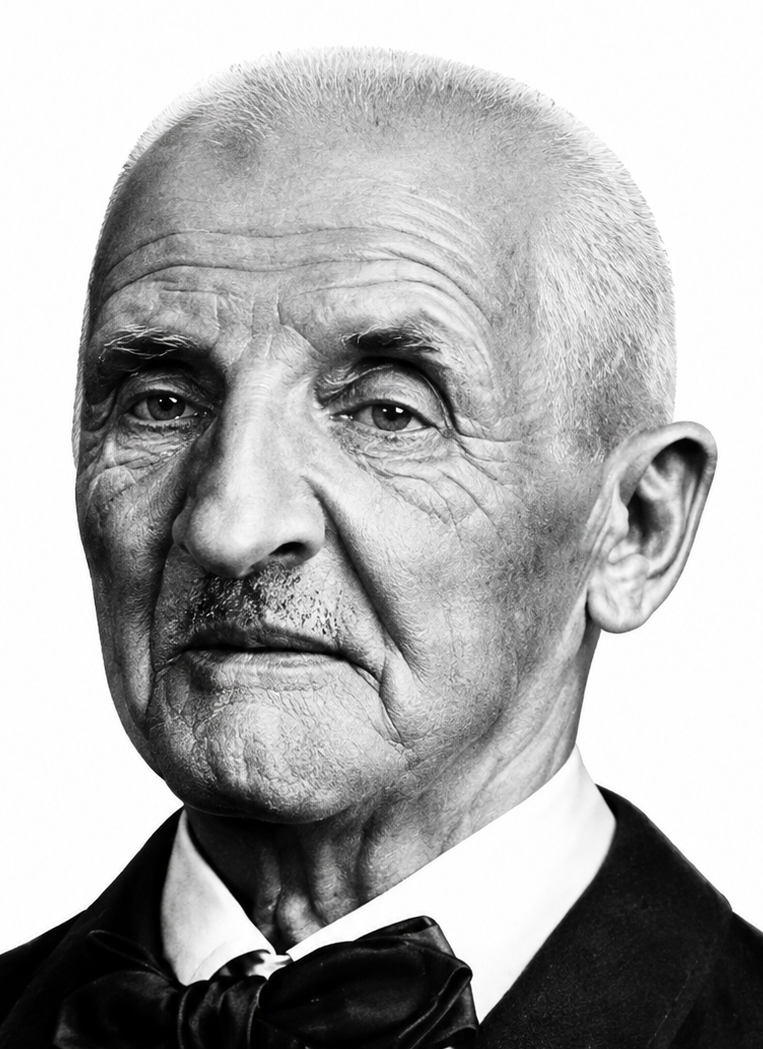
BRUCKNER, Anton

Symphony No. 2 (Ed. Haas)

B-Note says:“Poised between searching uncertainty and visionary grandeur, Bruckner's "Second" reveals a lyrical intimacy unmatched among his symphonies.”
Opus
WAB 102
Key
C minor
Composed
1872/1877
Duration
ca. 1:05:00 min
First publisher
1938, Musikwissenschaftlicher Verlag, Wien/Leipzig
Instrumentation
2.2.2.2 / 4.2.3.0 / timp, str i
Woodwinds
Flutes2
Oboes2
Clarinets2
Bassoons2
Brass
Horns4
Trumpets2
Trombones3
Tuba0
Further timp Timpani · str Strings
Orchestra
Symphony orchestra
Your orchestra Available to registered customers only i Your orchestra Save your orchestra’s line-up once – by drag & drop or from a template, from chamber to full symphony orchestra. Fits – no extra players needed Nearly – additionally: 1 harp 5 extra players needed Every work page then shows at a glance whether the work fits your orchestra and which extra players you would need. Several orchestras and project line-ups are possible. The catalogue is aimed at orchestras and ensembles – once logged in, the feature is available under "My orchestra". Log in →
Robert Haas’s 1938 edition of the Second Symphony marked an important milestone in the scholarly study of Bruckner’s work. Whereas the 1892 first printed edition had long been the principal source available to performers and scholars, Haas based his edition on a wide range of sources, including auto-graph manuscripts, copyists’ scores, and other contemporary documents. On the basis of this material, he argued that the printed version contained numerous alterations and cuts that did not always reflect Bruckner’s original artistic intentions.

Accordingly, while his edition is fundamentally based on the final 1877 version of the symphony, Haas restored readings from earlier stages of the work and, in several places, reversed later cuts. The result was not a reproduction of a single historical version, but rather a hybrid edition combining elements from different phases of the symphony’s evolution. Haas’s aim was both to illuminate the work’s complex genesis and to preserve passages that he regarded as possessing particular artistic significance. Although the edition remained highly influential for decades, it was later criticized by Leopold Nowak, whose own edition sought a more consistent separation of the individual versions of the work.

Anton Bruckner's Second Symphony was composed in the early 1870s and marks an important step in the development of his symphonic language. The work still stands between the tentative experiments of the First Symphony and the assured monumentality of the later numbered works — yet it already displays unmistakably those characteristic features that establish Bruckner as a central figure of Austro-German late Romanticism: broad, expansive melodic arches, massive blocks of sound, and a conception of sonic fullness and silence shaped by his experience of organ music.

The symphony is widely regarded as the most lyrical of Bruckner's major orchestral works. Its musical language moves in the tension between intimate cantability and orchestral power, with the strings frequently suffused with an almost vocal warmth. The influence of the Viennese tradition — Schubert, but also Wagner — is palpable, without Bruckner ever losing his distinctive, quasi-liturgically grounded voice.

The present edition follows the version prepared by Robert Haas as part of the Bruckner Complete Edition, based on sources from the early transmission of the work. Given the complex history of the symphony's composition and subsequent revisions, this editorial decision carries particular significance.

Date
26. Oktober 1873
Venue
Wien, Großer Musikvereinssaal
Conductor
Anton Bruckner
Orchestra
Wiener Philharmoniker
Symphony No. 2 in C minor was premiered by Bruckner himself, one of the rare occasions on which he stood before the Vienna Philharmonic as a conductor. Brahms is said to have been in the audience. The work had a complicated genesis: the Philharmonic had initially rejected the piece after a read-through in 1872, declaring it "impossible to conduct." Bruckner revised it accordingly, and the premiere finally came about as a result. The Haas edition (1938) reconstructs a version based essentially on the original 1872 score, differing from the 1877 version (Nowak edition) that later became more widely known. The symphony is dedicated to the conductor Otto Dessoff, who had supported Bruckner in Vienna.

Editions available

Item no. Description Price (incl. 7% VAT)
BO-6581.00Full score
1938, Musikwissenschaftlicher Verlag, Wien/Leipzig
€ 59,80
BO-6581.01Large conductor's score A3
1938, Musikwissenschaftlicher Verlag, Wien/Leipzig
€ 90,00
BO-6581.10Set of parts with strings 5.4.3.2.2
1938, Musikwissenschaftlicher Verlag, Wien/Leipzig
€ 335,00
🎵 Digital options

Digital parts for this edition are not yet available. Please log in to request digitization.

BO-6581.21Extra Str. Vl.1€ 10,80
BO-6581.22Extra Str. Vl.2€ 10,80
BO-6581.23Extra Str. Va.€ 10,80
BO-6581.24Extra Str. Vc.€ 10,80
BO-6581.25Extra Str. Bass€ 10,80

Sample pages

Not yet available

Video

More by Anton Bruckner

🎵 Request digital parts

The parts for this work are not yet available as digital files. You can request digitization here. Please briefly indicate which parts you need and by when they should be delivered. Please note that we explicitly cannot guarantee the delivery of digital parts. You will be promptly informed about the planned availability.

ⓘ PLEASE NOTE THAT DIGITAL PARTS ARE ONLY AVAILABLE IN ADDITION TO PRINTED PARTS.

Please log in to submit a request.