Fast delivery within 24 hours Integrated customer cloud for digital parts Over 2,000 orchestral works in the catalogue Personal advice — orch@bnote.de SOS +++ EMERGENCY PARTS SERVICE Distribution for renowned partner publishers Online tool for pre-print string annotations Fast delivery within 24 hours Integrated customer cloud for digital parts Over 2,000 orchestral works in the catalogue Personal advice — orch@bnote.de SOS +++ EMERGENCY PARTS SERVICE Distribution for renowned partner publishers Online tool for pre-print string annotations
🔑 Log in 📝 Become a customer
Kat. #BO-6661  ·  B-NOTE
Editions & prices
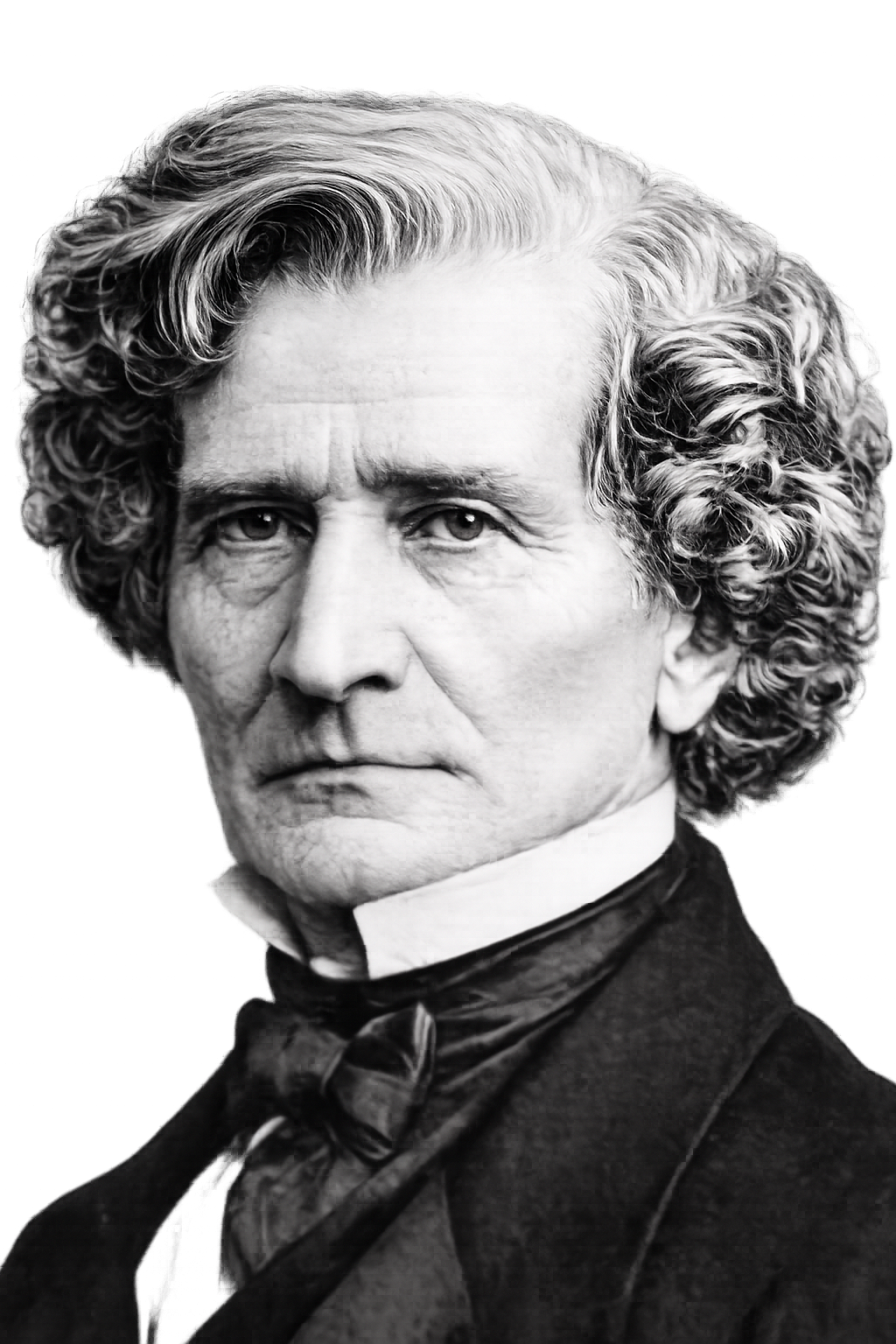
Berlioz, Hector

Summer Nights – Six songs for voice and orchestra

B-Note says:“The cycle reveals a different Berlioz — one of lyrical restraint, delicate woodwind colors, and harmonic daring ahead of his time.”
Opus
op.7 / H 81
Composed
1840–1841
Duration
ca. 31:00 min
First publisher
1905, Breitkopf & Härtel, Leipzig
Instrumentation
2.1.2.2 / 3.0.0.0 / hp, str, voice i
Woodwinds
Flutes2
Oboes1
Clarinets2
Bassoons2
Brass
Horns3
Trumpets0
Trombones0
Tuba0
Further hp Harp · str Strings · voice Voice
Orchestra
Symphony orchestra
Text language
German, English, French
Your orchestra Available to registered customers only i Your orchestra Save your orchestra’s line-up once – by drag & drop or from a template, from chamber to full symphony orchestra. Fits – no extra players needed Nearly – additionally: 1 harp 5 extra players needed Every work page then shows at a glance whether the work fits your orchestra and which extra players you would need. Several orchestras and project line-ups are possible. The catalogue is aimed at orchestras and ensembles – once logged in, the feature is available under "My orchestra". Log in →
Berlioz’s own orchestral arrangement of the cycle of piano songs based on texts by Théophile Gautier. German text by Peter Cornelius, english translation by Percy Pinkerton.

Villanelle
Le spectre de la rose
Sur les lagunes (Lamento)
Absence
Au cimitière (Clair de lune)
L’ile inconnue (Barcarolle)

Hector Berlioz's “Les nuits d'été” stands as one of the most significant French song cycles of the nineteenth century. The six settings of poems by Théophile Gautier were composed initially as songs with piano accompaniment before Berlioz himself arranged them for orchestra — a process regarded as an early milestone in the art of the orchestral song. In this form, the pieces unfold a subtle, almost chamber-like orchestral language, conjuring a dreamlike, romantically elegiac atmosphere through delicate instrumentation, refined woodwind colours, and a discreet shimmer of harp.

The musical language places the work firmly within the French High Romantic tradition: Berlioz combines lyrical melodic lines with a harmonic boldness that reaches far beyond the conventions of his time. The orchestral accompaniment serves not merely as support but creates independent sound-worlds of its own — from the dancing lightness of the Villanelle to the dark mourning of the lament. In this way, the cycle anticipates qualities that would not come to full fruition until the late nineteenth century, notably in the German orchestral song.

The cycle is considered one of the most intimate and personal works of Berlioz, that master of the grand gesture, and reveals his rarely acknowledged gift for lyrical restraint and tonal poetry.

Date
3. November 1856
Venue
Paris
Conductor
Hector Berlioz
"Les nuits d'été" Op. 7 was originally composed in 1840-41 as a song cycle for voice and piano, setting poems by Théophile Gautier from his collection "La Comédie de la Mort" (1838). The orchestration was carried out in stages: Berlioz first scored a single song for orchestra in 1843, and did not complete the remaining songs until 1856. The full orchestral version of all six songs received its premiere in Paris on November 3, 1856, conducted by Berlioz himself, with several different vocal soloists sharing the performance. From the outset, then, Berlioz conceived the cycle not as a unified work for a single voice type, but as a collection intended for a variety of voices. Today the work is regarded as one of the earliest significant orchestral song cycles in the history of music.

Editions available

Item no. Description Price (incl. 7% VAT)
BO-6661.00Full score
€ 36,80
BO-6661.10Set of parts with strings 5.4.3.2.2
€ 95,00
🎵 Digital options

Digital parts for this edition are not yet available. Please log in to request digitization.

BO-6661.21Extra Str. Vl.1€ 4,50
BO-6661.22Extra Str. Vl.2€ 4,50
BO-6661.23Extra Str. Va.€ 4,50
BO-6661.24Extra Str. Vc.€ 4,50
BO-6661.25Extra Str. Bass€ 4,50

Sample pages

Not yet available

Video

More by Hector Berlioz

🎵 Request digital parts

The parts for this work are not yet available as digital files. You can request digitization here. Please briefly indicate which parts you need and by when they should be delivered. Please note that we explicitly cannot guarantee the delivery of digital parts. You will be promptly informed about the planned availability.

ⓘ PLEASE NOTE THAT DIGITAL PARTS ARE ONLY AVAILABLE IN ADDITION TO PRINTED PARTS.

Please log in to submit a request.