Fast delivery within 24 hours Integrated customer cloud for digital parts Over 2,000 orchestral works in the catalogue Personal advice — orch@bnote.de SOS +++ EMERGENCY PARTS SERVICE Distribution for renowned partner publishers Online tool for pre-print string annotations Fast delivery within 24 hours Integrated customer cloud for digital parts Over 2,000 orchestral works in the catalogue Personal advice — orch@bnote.de SOS +++ EMERGENCY PARTS SERVICE Distribution for renowned partner publishers Online tool for pre-print string annotations
🔑 Log in 📝 Become a customer
Kat. #BO-5791  ·  B-NOTE
Editions & prices
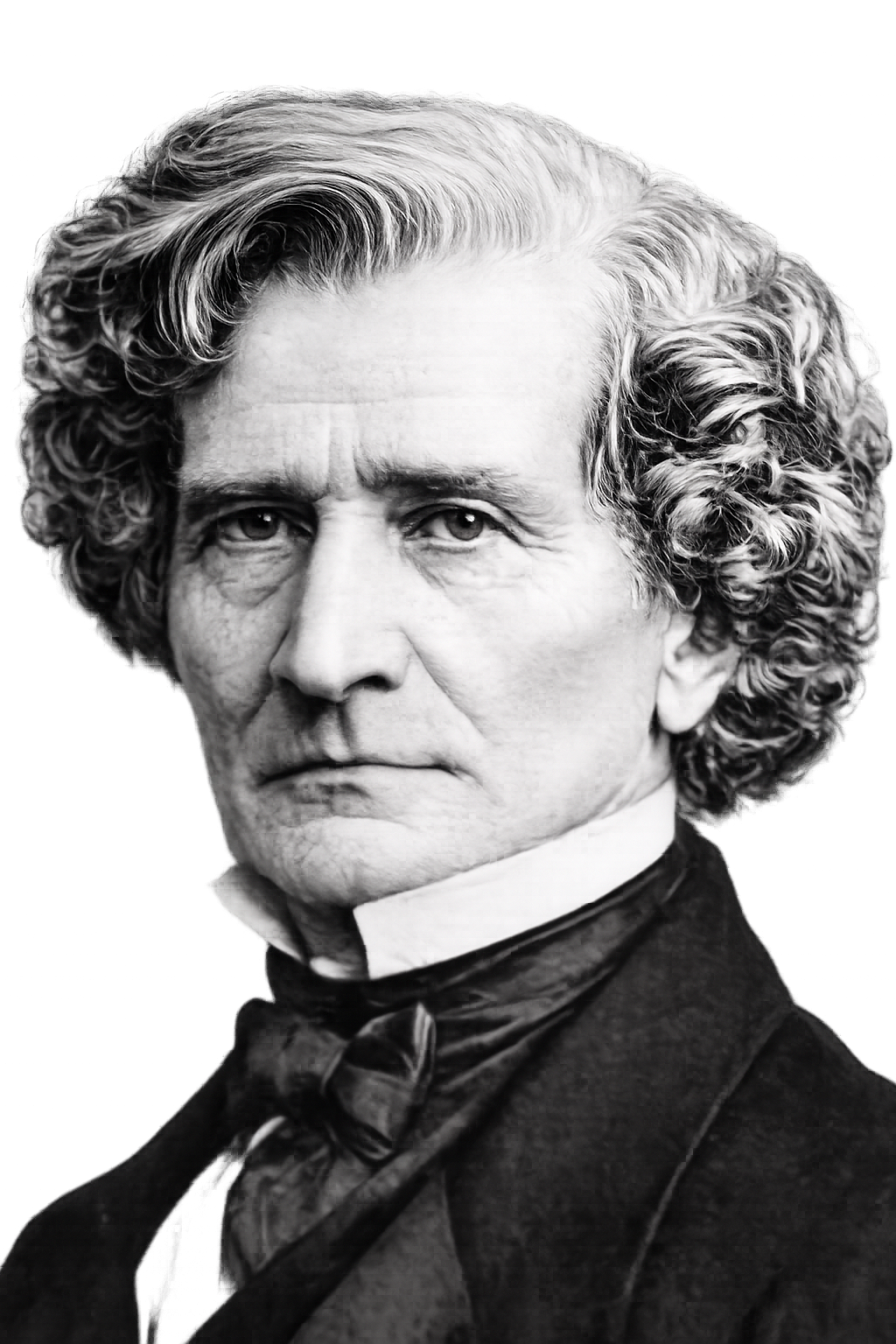
BERLIOZ, Hector

Harold in Italy

Symphony in four parts with solo viola
B-Note says:“A solo viola embodies the literary wanderer from Byron's Childe Harold's Pilgrimage, bearing the entire symphonic narrative on its strings.”
Opus
H 68
Key
G major
Composed
1834
Duration
ca. 44:00 min
First publisher
Breitkopf & Härtel, Leipzig, 1910
Instrumentation
2D1.2.2.4 / 4.2+2.3.1 / timp, perc, hp, str, va solo i
Woodwinds
Flutes2D1
Oboes2
Clarinets2
Bassoons4
Brass
Horns4
Trumpets2+2
Trombones3
Tuba1
Further timp Timpani · perc Percussion · hp Harp · str Strings · va solo
+1 = additional player on an auxiliary instrument (e.g. piccolo, cor anglais, bass clarinet, contrabassoon)
d = doubling, e.g. 2d1: one of the two players also plays the auxiliary instrument
Orchestra
Symphony orchestra
Soloist
Viola
Your orchestra Available to registered customers only i Your orchestra Save your orchestra’s line-up once – by drag & drop or from a template, from chamber to full symphony orchestra. Fits – no extra players needed Nearly – additionally: 1 harp 5 extra players needed Every work page then shows at a glance whether the work fits your orchestra and which extra players you would need. Several orchestras and project line-ups are possible. The catalogue is aimed at orchestras and ensembles – once logged in, the feature is available under "My orchestra". Log in →
Editor: Felix Weingartner

Berlioz's "Harold in Italy" stands as one of the most innovative symphonic works of the French Romantic era, combining the traditional four-movement symphony with a prominent solo viola part that serves as the musical embodiment of Byron's melancholic hero. The work emerged during Berlioz's most creative period, shortly after his groundbreaking "Symphonie fantastique," and demonstrates his mastery of orchestral color and programmatic storytelling.

The composer's revolutionary approach to orchestration is evident throughout the work, with the solo viola weaving through richly textured orchestral landscapes that evoke the Italian countryside. Berlioz's characteristic harmonic boldness and rhythmic vitality create vivid musical tableaux, from pastoral scenes to wild brigands' revelry, showcasing his ability to translate literary inspiration into purely musical terms.

The symphony reflects the broader European fascination with Italian culture and Byron's Romantic poetry that dominated the 1830s. While commissioned by Paganini, who reportedly found the viola part insufficiently virtuosic, the work represents Berlioz's unique contribution to French symphonic literature, blending German structural principles with distinctly French orchestral sensibility and Mediterranean atmosphere.

„I wanted to write a series of orchestral scenes in which the viola would play a more or less active role, while maintaining the character of a melancholy dreamer in the vein of Byron's Childe Harold.“
— Berlioz, Mémoires
„Harold in Italy is a work of rare originality and beauty. The viola sings like a human voice, telling its stories with a poetry that only Berlioz could create.“
— Robert Schumann, Neue Zeitschrift für Musik, 1838
Date
23. November 1834
Venue
Paris, Conservatoire
Conductor
Hector Berlioz
Orchestra
Orchestre du Conservatoire
The work was commissioned at the suggestion of Niccolò Paganini, who wanted a concerto for viola and orchestra. However, Paganini was dissatisfied with the result, as the solo viola part lacked sufficient virtuosic passages and had too many rests. Ironically, it was not Paganini who played the viola at the premiere, but Chrétien Urhan. Only years later, in 1838, did Paganini publicly honor Berlioz and present him with 20,000 francs for this work.

Editions available

Item no. Description Price (incl. 7% VAT)
BO-5791.00Full score
Breitkopf & Härtel, Leipzig, 1910
€ 59,80
BO-5791.01Large conductor's score A3
Breitkopf & Härtel, Leipzig, 1910
€ 95,00
BO-5791.10Set of parts with strings 5.4.3.2.2
Breitkopf & Härtel, Leipzig, 1910
€ 315,00
🎵 Digital options

Digital parts for this edition are not yet available. Please log in to request digitization.

BO-5791.21Extra Str. Vl.1€ 9,80
BO-5791.22Extra Str. Vl.2€ 9,80
BO-5791.23Extra Str. Va.€ 9,80
BO-5791.24Extra Str. Vc.€ 9,80
BO-5791.25Extra Str. Bass€ 9,80

Sample pages

Not yet available

Video

More by Hector Berlioz

🎵 Request digital parts

The parts for this work are not yet available as digital files. You can request digitization here. Please briefly indicate which parts you need and by when they should be delivered. Please note that we explicitly cannot guarantee the delivery of digital parts. You will be promptly informed about the planned availability.

ⓘ PLEASE NOTE THAT DIGITAL PARTS ARE ONLY AVAILABLE IN ADDITION TO PRINTED PARTS.

Please log in to submit a request.