Are you here on behalf of an orchestra, an institution or a business – or as a private individual?
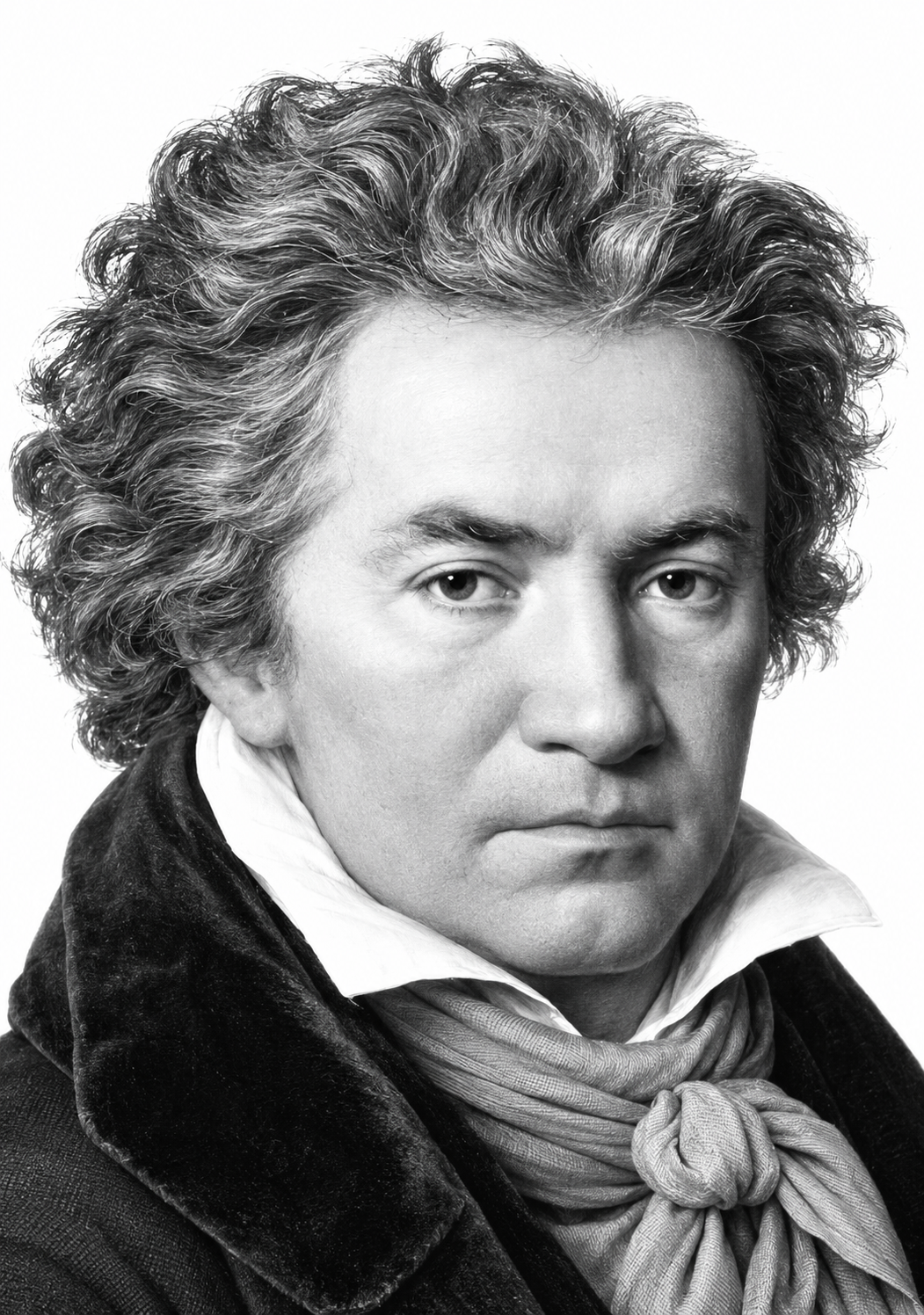
Beethoven's incidental music for Goethe's tragedy “Egmont” was composed in 1809–1810 and ranks among the composer's most significant contributions to the genre of theatre music. The work reflects Beethoven's deep affinity with themes of freedom, resistance, and heroic tragedy – ideas that also pervade his symphonies of those years. In the celebrated overture, this outlook is distilled into a dramatic arc that moves from sombre gravity to triumphant eruption.
In terms of musical language, the work sits at the heart of Viennese Classicism, yet its emotional directness and orchestral force already display traits of the emerging Romantic style. The music moves with assured command between tender introspection – as in the gentle slow entr'actes – and resolute drama. The two songs for solo voice lend the work a folksong-like warmth that brings human intimacy to the otherwise abstract orchestral language.
Beethoven is said to have held Goethe in extraordinarily high regard as a poet, and this admiration is considered one of the driving forces behind the unusual care with which he approached the setting. The closing Victory Symphony, with which the work ends, is more than a theatrical gesture – it is a musical act of faith.
| Item no. | Description | Price (incl. 7% VAT) | |
|---|---|---|---|
| BO-6665.00 | Full score | € 34,80 | |
| BO-6665.17 | Score and parts | € 205,00 | |
| BO-6665.21 | Extra Str. Vl.1 | € 7,50 | |
| BO-6665.22 | Extra Str. Vl.2 | € 7,50 | |
| BO-6665.23 | Extra Str. Va. | € 7,50 | |
| BO-6665.24 | Extra Str. Vc. | € 7,50 | |
| BO-6665.25 | Extra Str. Bass | € 7,50 | |
| BO-6665.09 | Piano reduction with solo part | € 6,80 |