Fast delivery within 24 hours Integrated customer cloud for digital parts Over 2,000 orchestral works in the catalogue Personal advice — orch@bnote.de SOS +++ EMERGENCY PARTS SERVICE Distribution for renowned partner publishers Online tool for pre-print string annotations Fast delivery within 24 hours Integrated customer cloud for digital parts Over 2,000 orchestral works in the catalogue Personal advice — orch@bnote.de SOS +++ EMERGENCY PARTS SERVICE Distribution for renowned partner publishers Online tool for pre-print string annotations
🔑 Log in 📝 Become a customer
Kat. #BO-6664  ·  B-NOTE
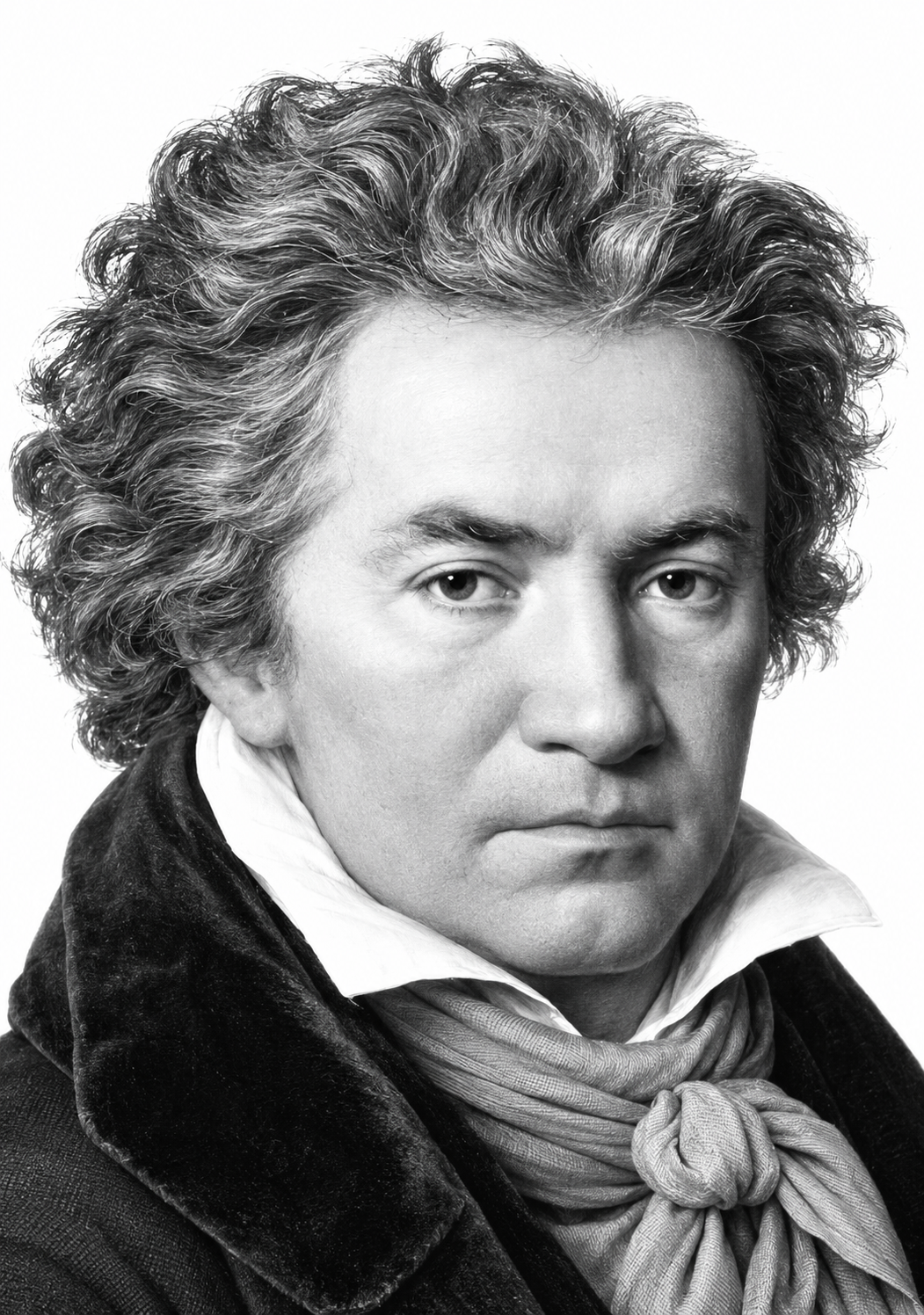
Beethoven, Ludwig van

Egmont Overture for orchestra op.84 (score)

aus der Musik zu Goethes Trauerspiel
B-Note says:“Crushing blows of fate, urgent driving passages, and a triumphant conclusion — Beethoven's middle-period musical language distilled to its essence.”
Opus
op.84
Composed
1809–1810
Duration
ca. 9:00 min
First publisher
Breitkopf & Härtel, Leipzig
Can be combined with i Can be combined with This reprint edition is based on the same editorial source as the editions listed here. The materials can therefore be combined with one another.
Breitkopf PB-170
Kalmus A1262
Luck's Music 05095
Instrumentation
2d1.2.2.2 / 4.2.0.0 / timp, str i
Woodwinds
Flutes2d1
Oboes2
Clarinets2
Bassoons2
Brass
Horns4
Trumpets2
Trombones0
Tuba0
Further timp Timpani · str Strings
d = doubling, e.g. 2d1: one of the two players also plays the auxiliary instrument
Orchestra
Symphony orchestra
Your orchestra Available to registered customers only i Your orchestra Save your orchestra’s line-up once – by drag & drop or from a template, from chamber to full symphony orchestra. Fits – no extra players needed Nearly – additionally: 1 harp 5 extra players needed Every work page then shows at a glance whether the work fits your orchestra and which extra players you would need. Several orchestras and project line-ups are possible. The catalogue is aimed at orchestras and ensembles – once logged in, the feature is available under "My orchestra". Log in →

Beethoven's overture to Goethe's tragedy “Egmont” was composed around 1809/10 and ranks among the most significant orchestral works of the German Classical period. It forms part of a more extensive incidental music score that Beethoven wrote on commission for the Vienna Burgtheater – a project that clearly held deep personal meaning for the composer, who saw Goethe's freedom-fighting hero Egmont as a tragic embodiment of resistance against oppression.

The overture captivates through its dramatic power and impassioned character. Heavy chords, striking like blows of fate, alternate with urgent, propulsive passages – a musical language that also shapes Beethoven's middle-period symphonies. The work moves between sombre gravity and heroic defiance, culminating in a triumphant finale regarded as a musical apotheosis of the idea of freedom.

In its scoring – strings, woodwind, brass, and timpani – Beethoven remains faithful to the classical orchestra of his time, yet exploits its possibilities with sovereign mastery. The “Egmont” Overture is considered one of his most expressive shorter symphonic works and is said to have made a profound impression on Goethe himself from an early stage.

„I approached Goethe's "Egmont" with particular love and warmth – out of admiration for this great literary work, which I endeavored to capture in music.“
— Beethoven, Brief an Breitkopf & Härtel, Leipzig, 1811; zitiert in: Alexander Wheelock Thayer, „Ludwig van Beethovens Leben", Bd. 3 (dt. Ausgabe bearb. von Hermann Deiters, Berlin 1879)
Date
15. Juni 1810
Venue
Wien, Burgtheater
Conductor
Ignaz von Seyfried
Orchestra
Orchester des Burgtheaters Wien
The Egmont Overture, Op. 84, was composed as part of Beethoven's incidental music for Johann Wolfgang von Goethe's tragedy Egmont. The complete incidental music, which in addition to the overture comprises nine further numbers including songs, melodramas, and entr'actes, received its premiere on June 15, 1810, at the Burgtheater in Vienna, on the occasion of a performance of Goethe's play. Goethe himself was deeply moved by Beethoven's musical interpretation of his work, remarking that Beethoven had captured the spirit of the drama to perfection. The overture in F minor is considered one of the most significant symphonic tone poems of the Viennese Classical period. Despite its tragic subject matter, the death of the Dutch freedom fighter Count Egmont, it closes with a triumphant finale in F major, widely interpreted as a musical symbol of liberty's victory over tyranny.

Also premiered by the Orchester des Burgtheaters Wien

Editions available

Item no. Description Price (incl. 7% VAT)
BO-6664.00Full score
€ 19,80
BO-6664.10Set of parts with strings 5.4.3.2.2
€ 65,00
🎵 Digital options

Digital parts for this edition are not yet available. Please log in to request digitization.

BO-6664.21Extra Str. Vl.1€ 3,50
BO-6664.22Extra Str. Vl.2€ 3,50
BO-6664.23Extra Str. Va.€ 3,50
BO-6664.24Extra Str. Vc.€ 3,50
BO-6664.25Extra Str. Bass€ 3,50

Sample pages

Sample pages Sample pages

More by Ludwig van Beethoven

🎵 Request digital parts

The parts for this work are not yet available as digital files. You can request digitization here. Please briefly indicate which parts you need and by when they should be delivered. Please note that we explicitly cannot guarantee the delivery of digital parts. You will be promptly informed about the planned availability.

ⓘ PLEASE NOTE THAT DIGITAL PARTS ARE ONLY AVAILABLE IN ADDITION TO PRINTED PARTS.

Please log in to submit a request.