Fast delivery within 24 hours
Integrated customer cloud for digital parts
Over 2,000 orchestral works in the catalogue
Personal advice — orch@bnote.de SOS +++ EMERGENCY PARTS SERVICE
Distribution for renowned partner publishers
Online tool for pre-print string annotations
Fast delivery within 24 hours
Integrated customer cloud for digital parts
Over 2,000 orchestral works in the catalogue
Personal advice — orch@bnote.de SOS +++ EMERGENCY PARTS SERVICE
Distribution for renowned partner publishers
Online tool for pre-print string annotations
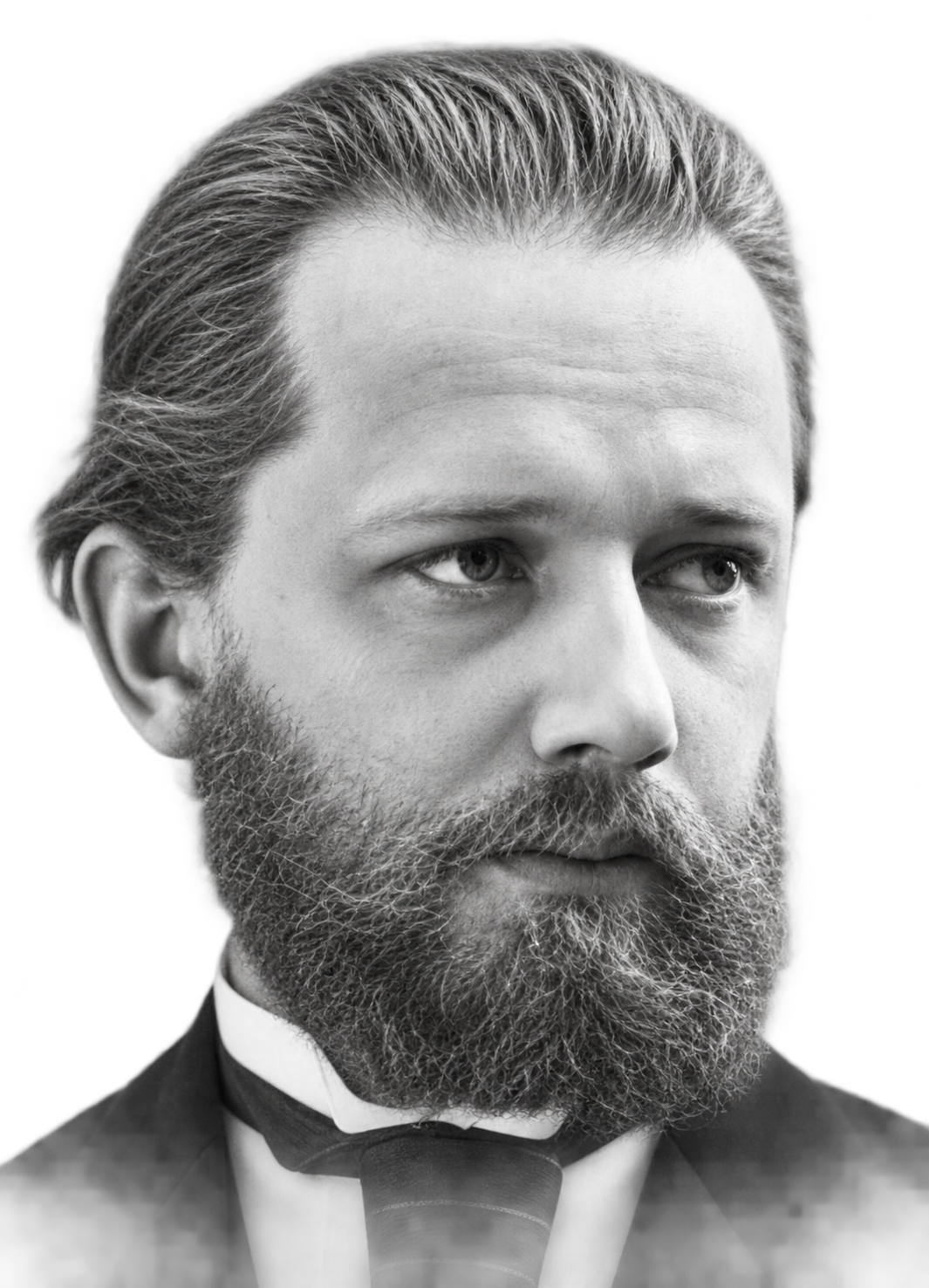
Short biography Peter Ilyich Tchaikovsky was born on 7 May 1840 in Votkinsk, in the Vyatka region of Russia. After an early education in Saint Petersburg, he studied law and worked briefly as a civil servant before enrolling at the newly founded Saint Petersburg Conservatory in 1862. He subsequently joined the faculty of the Moscow Conservatory in 1866, a post he held for over a decade. Following years of increasing international recognition, he died on 6 November 1893 in Saint Petersburg, shortly after the premiere of his Sixth Symphony; the circumstances of his death remain a matter of historical debate.
Historical placement Tchaikovsky is one of the central figures of the Romantic era in Western art music and the most internationally celebrated Russian composer of the nineteenth century. His style blends Western European formal traditions—particularly those of German and Italian music—with distinctly Russian melodic character, setting him somewhat apart from the nationalist composers of the so-called "Mighty Handful." His contributions to ballet, symphony, opera, and chamber music were foundational to the late Romantic repertoire and continue to anchor concert and opera house programming worldwide.
Personal connections Anton Rubinstein was Tchaikovsky's principal teacher at the Saint Petersburg Conservatory. Nikolai Rubinstein, Anton's brother, was a close colleague and champion of Tchaikovsky's work at the Moscow Conservatory, though he initially rejected the First Piano Concerto before later revising his opinion. Nadezhda von Meck was Tchaikovsky's long-standing patroness, providing him financial support for many years and maintaining an extensive correspondence with him, though the two famously never met in person. Mily Balakirev, leader of the Mighty Handful, collaborated with Tchaikovsky and suggested the program for his fantasy-overture Romeo and Juliet. Sergei Taneyev was among Tchaikovsky's notable students at the Moscow Conservatory.
Important works
Swan Lake – Ballet (Op. 20, 1876)
The Sleeping Beauty – Ballet (Op. 66, 1889)
The Nutcracker – Ballet (Op. 71, 1892)
Symphony No. 6 in B minor "Pathétique" – Symphony (Op. 74, 1893)
Symphony No. 5 in E minor – Symphony (Op. 64, 1888)
Piano Concerto No. 1 in B-flat minor – Concerto (Op. 23, 1875)
Violin Concerto in D major – Concerto (Op. 35, 1878)
Romeo and Juliet – Fantasy Overture (TH 42, 1869/rev. 1880)
Eugene Onegin – Opera (Op. 24, 1879)
String Quartet No. 1 in D major – Chamber Music (Op. 11, 1871)
Here you will find further reprint editions from various sources which we are still preparing for inclusion in our main catalogue. As a rule they are already available. This archive also allows you to search for editions of the former Kalmus catalogue by reference. Almost all public-domain works from that catalogue can be supplied quickly, identical in content and quality. Please do ask!
1812 Overture
Kalmus no. A21762+1, 2+1, 2, 2 - 4, 2+2, 3, 1, timp, perc, str, banda ad lib