Fast delivery within 24 hours
Integrated customer cloud for digital parts
Over 2,000 orchestral works in the catalogue
Personal advice — orch@bnote.de SOS +++ EMERGENCY PARTS SERVICE
Distribution for renowned partner publishers
Online tool for pre-print string annotations
Fast delivery within 24 hours
Integrated customer cloud for digital parts
Over 2,000 orchestral works in the catalogue
Personal advice — orch@bnote.de SOS +++ EMERGENCY PARTS SERVICE
Distribution for renowned partner publishers
Online tool for pre-print string annotations
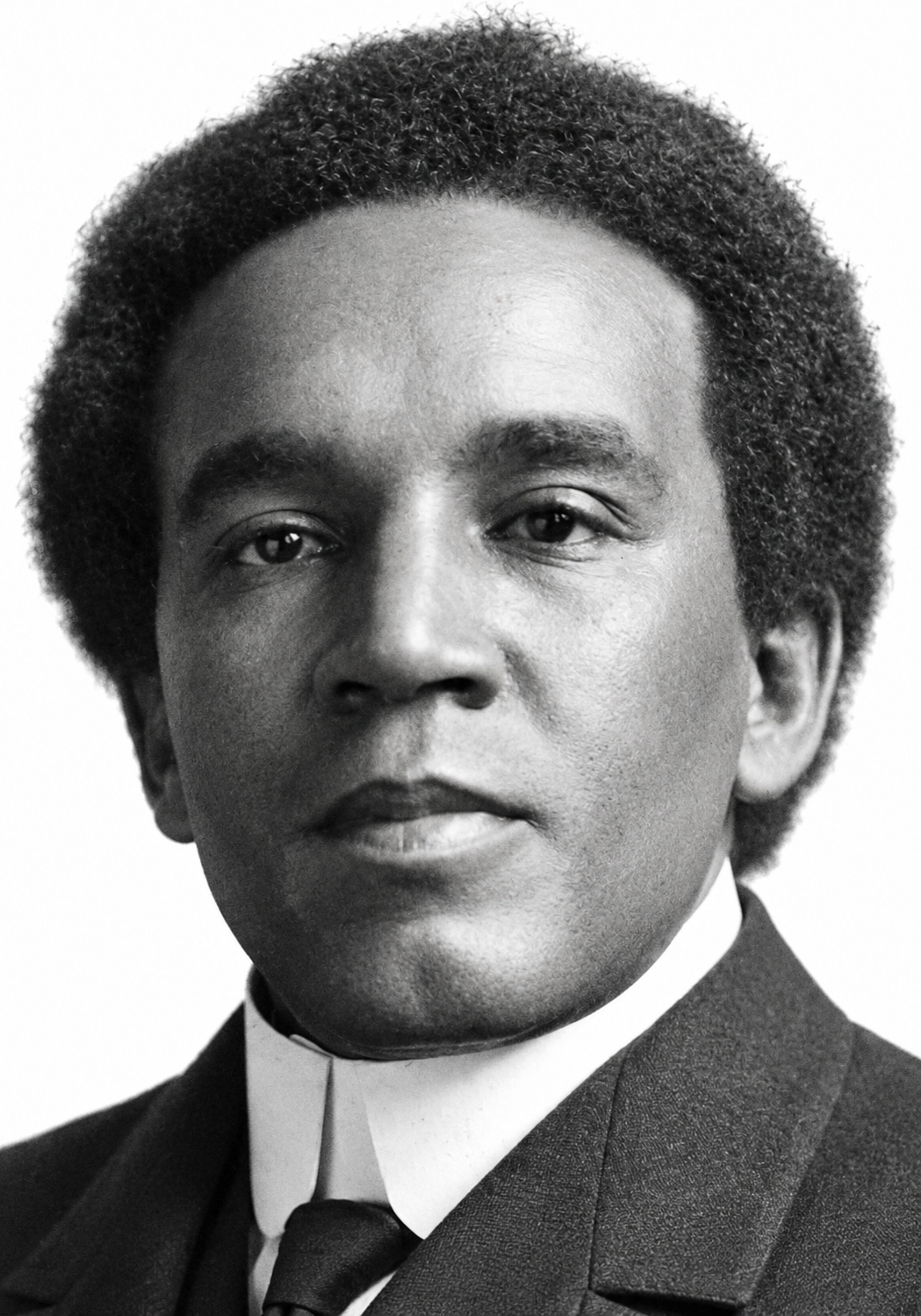
Short biography Samuel Coleridge-Taylor was born on 15 August 1875 in London, the son of a Sierra Leonean physician and an English mother. He received his training at the Royal College of Music in London, where he studied from 1890, with Charles Villiers Stanford among his most important teachers. Coleridge-Taylor quickly gained international renown, particularly in the United States, where he was regarded as a significant figurehead by African-American and African communities, and he travelled there on three occasions (1904, 1906, 1910) for performances of his works. He died on 1 September 1912 in Croydon of pneumonia, at the age of just 37.
Historical placement Coleridge-Taylor belongs to the late Romantic period and may be placed stylistically within the English national school of the late nineteenth century. His output combines late Romantic harmony with folk-inspired elements, including influences drawn from African and African-American musical traditions, which he consciously incorporated into his compositions. In doing so, he made a pioneering contribution to the engagement with cultural identity in art music, and is considered one of the first composers to embed African cultural heritage programmatically within the European art music tradition.
Personal connections Charles Villiers Stanford was Coleridge-Taylor's composition teacher at the Royal College of Music. Edward Elgar was close to him as a patron and colleague, and recommended him to the Three Choirs Festival, which contributed to his early successes as a composer. The American poet Paul Laurence Dunbar collaborated with him as a librettist, though he was not a musical figure in the strict sense.
Important works
Hiawatha's Wedding Feast – cantata for tenor, chorus and orchestra (op. 30, 1898)
The Death of Minnehaha – cantata for soprano, baritone, chorus and orchestra (op. 30 no. 2, 1899)
Hiawatha's Departure – cantata for soloists, chorus and orchestra (op. 30 no. 3, 1900)
Ballade in a-Moll – orchestral work (op. 33, 1898)
Violin Concerto in g-Moll – concerto (op. 80, 1912)
Piano Quintet in g-Moll – chamber music (op. 1, 1893)
Twenty-Four Negro Melodies – piano work (op. 59, 1905)
Symphonic Variations on an African Air – orchestral work (op. 63, 1906)
String Quartet in d-Moll – chamber music (op. 60, attribution uncertain)
Petite Suite de Concert – orchestral work (op. 77, 1910)
Here you will find further reprint editions from various sources which we are still preparing for inclusion in our main catalogue. As a rule they are already available. This archive also allows you to search for editions of the former Kalmus catalogue by reference. Almost all public-domain works from that catalogue can be supplied quickly, identical in content and quality. Please do ask!