Fast delivery within 24 hours Integrated customer cloud for digital parts Over 2,000 orchestral works in the catalogue Personal advice — orch@bnote.de SOS +++ EMERGENCY PARTS SERVICE Distribution for renowned partner publishers Online tool for pre-print string annotations Fast delivery within 24 hours Integrated customer cloud for digital parts Over 2,000 orchestral works in the catalogue Personal advice — orch@bnote.de SOS +++ EMERGENCY PARTS SERVICE Distribution for renowned partner publishers Online tool for pre-print string annotations
🔑 Log in 📝 Become a customer
Kat. #BO-7404  ·  B-NOTE
Editions & prices
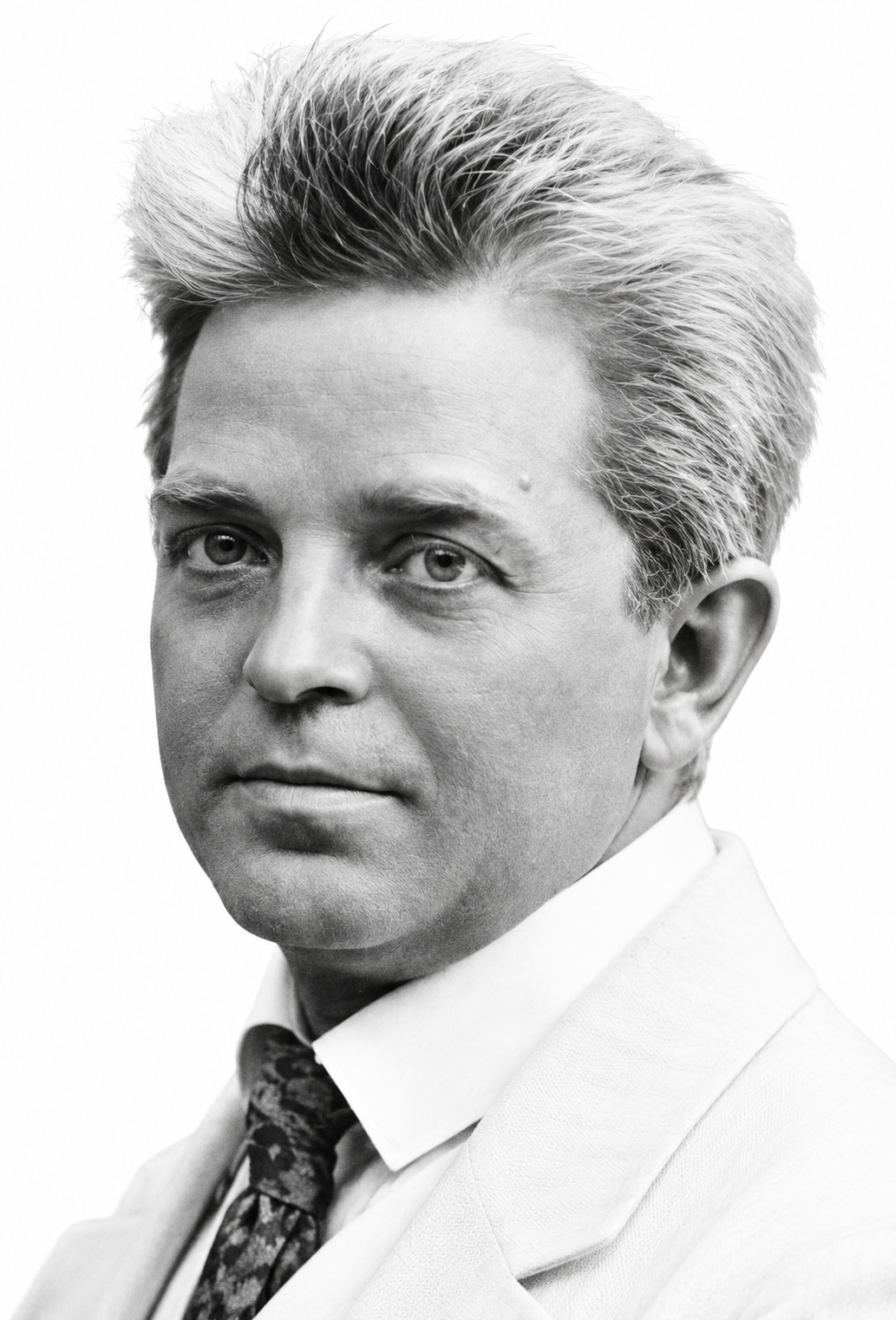
Nielsen, Carl

Symphony No. 5

Original edition 1926
B-Note says:“With its acerbic sound and elemental energy, the symphony occupies a singular place in the Danish musical tradition.”
Opus
op.50 /CNW 29
Composed
1921–1922
Duration
ca. 39:00 min
First publisher
Skandinavisk Musikforlag, Kopenhagen, 1950
Can be combined with i Can be combined with This reprint edition is based on the same editorial source as the editions listed here. The materials can therefore be combined with one another.
SM 4552
Kalmus A5659
Luck's Music 09020
Instrumentation
3d1.2.2.2 / 4.3.3.1 / timp, perc, cel, str i
Woodwinds
Flutes3d1
Oboes2
Clarinets2
Bassoons2
Brass
Horns4
Trumpets3
Trombones3
Tuba1
Further timp Timpani · perc Percussion · cel Celesta · str Strings
d = doubling, e.g. 2d1: one of the two players also plays the auxiliary instrument
Orchestra
Symphony orchestra
Your orchestra Available to registered customers only i Your orchestra Save your orchestra’s line-up once – by drag & drop or from a template, from chamber to full symphony orchestra. Fits – no extra players needed Nearly – additionally: 1 harp 5 extra players needed Every work page then shows at a glance whether the work fits your orchestra and which extra players you would need. Several orchestras and project line-ups are possible. The catalogue is aimed at orchestras and ensembles – once logged in, the feature is available under "My orchestra". Log in →
Symphony in Two Movements

I. Tempo giusto - Adagio
II. Allegro - Presto - Andante poco tranquillo

Carl Nielsen's Fifth Symphony, Op. 50, composed between 1921 and 1922, is widely regarded as one of the most significant works in Scandinavian symphonic literature of the early twentieth century. It stands at the heart of Nielsen's orchestral output and represents a culmination of his mature musical language – a language that, despite its roots in late Romanticism, reaches far beyond it.

The work is defined by an uncompromising creative will and a distinctive tension between destructive and constructive forces. Nielsen's musical idiom is austere and unrelenting, charged with an elemental energy that sets it apart equally from the German late Romanticism of the same period and from French Impressionism. Within the Danish musical tradition, this symphony occupies a unique position.

The scoring – three woodwinds, brass, timpani, expanded percussion, celesta, and strings – affords Nielsen a broad dynamic and coloristic range. The score's stark contrasts are said to have challenged contemporary audiences. Today the Fifth is regarded as one of the boldest symphonic statements of its era, powerfully affirming Nielsen's standing as a distinctive and independent voice in European concert life of the early twentieth century.

„The work revolves around the struggle between darkness and vitality, between the forces that seek to destroy life and the will that refuses to yield. I wanted to capture how evil, inertia, and lifelessness keep breaking through, and how life asserts itself in spite of it all.“
— Carl Nielsen, dokumentierte Äußerungen zur Entstehung der „Sinfonie Nr. 5", zitiert nach Robert Simpson: „Carl Nielsen, Symphonist", J. M. Dent & Sons, London 1952, S. 90 f.
Date
24. Januar 1922
Venue
Kopenhagen, Musikforeningen (Konzerthalle)
Conductor
Carl Nielsen
Orchestra
Det Kongelige Kapel (Dänisches Königliches Orchester)
Nielsen himself conducted the premiere of his Symphony No. 5, presenting a work that revolves around the struggle between destructive and constructive forces. Particularly famous is the passage in the first movement where the solo snare drummer is instructed to improvise at will, effectively disrupting the orchestral proceedings - one of the most radical directions found in symphonic music of the early twentieth century. Today the symphony is considered one of Nielsen's central works, and having been composed in the immediate aftermath of the First World War, its themes of chaos and order are firmly grounded in their historical moment.

The composer conducted the premiere himself.

Also premiered in 1922

Editions available

Item no. Description Price (incl. 7% VAT)
BO-7404.00Full score
€ 54,80
BO-7404.10Set of parts with strings 5.4.3.2.2
€ 300,00
🎵 Digital options

Digital parts for this edition are not yet available. Please log in to request digitization.

BO-7404.21Extra Str. Vl.1€ 9,80
BO-7404.22Extra Str. Vl.2€ 9,80
BO-7404.23Extra Str. Va.€ 9,80
BO-7404.24Extra Str. Vc.€ 9,80
BO-7404.25Extra Str. Bass€ 9,80

All prices include statutory VAT, plus shipping (digital editions: no shipping).

✉ If you need this work already now, please write to orch@bnote.de.

Sample pages

Not yet available

Video

More by Carl Nielsen

🎵 Request digital parts

The parts for this work are not yet available as digital files. You can request digitization here. Please briefly indicate which parts you need and by when they should be delivered. Please note that we explicitly cannot guarantee the delivery of digital parts. You will be promptly informed about the planned availability.

ⓘ PLEASE NOTE THAT DIGITAL PARTS ARE ONLY AVAILABLE IN ADDITION TO PRINTED PARTS.

Please log in to submit a request.