Fast delivery within 24 hours Integrated customer cloud for digital parts Over 2,000 orchestral works in the catalogue Personal advice — orch@bnote.de SOS +++ EMERGENCY PARTS SERVICE Distribution for renowned partner publishers Online tool for pre-print string annotations Fast delivery within 24 hours Integrated customer cloud for digital parts Over 2,000 orchestral works in the catalogue Personal advice — orch@bnote.de SOS +++ EMERGENCY PARTS SERVICE Distribution for renowned partner publishers Online tool for pre-print string annotations
🔑 Log in 📝 Become a customer
Kat. #BO-6634  ·  B-NOTE
Editions & prices
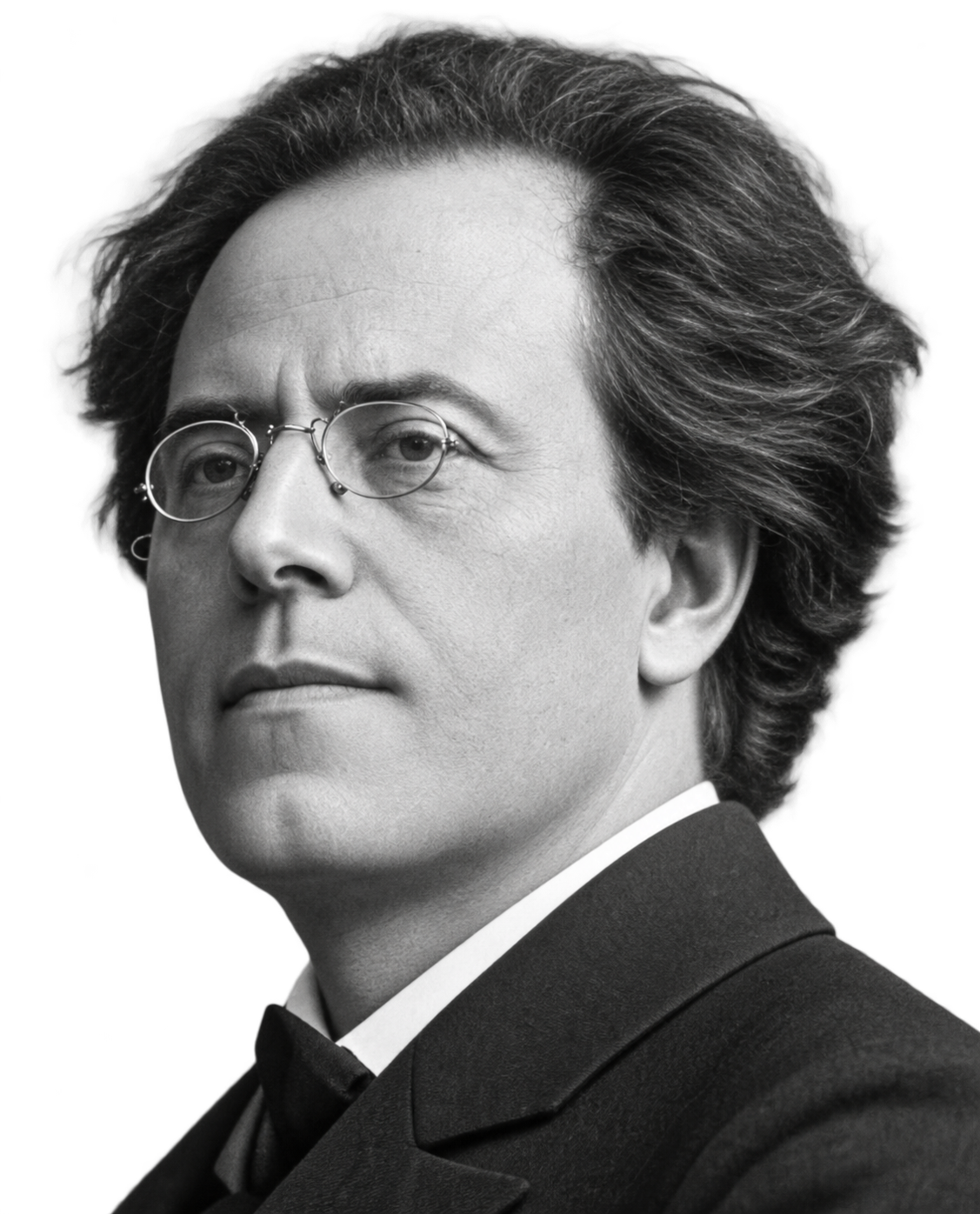
MAHLER, Gustav

Symphony No. 2 (Resurrection)

for choir and orchestra (late version, 1895)
B-Note says:“Poised at the threshold of modernity, the Second Symphony bridges the traditions of Beethoven and Bruckner with Mahler's own musical vision.”
Opus
GMW 30
Key
C minor
Composed
1888-1894
First publisher
1910, Universal Edition, Wien
Instrumentation
4D4.4D2.3D1+2Eb.4D2 / 10.10.4.1 / 3 timp, perc, 2hp, org, banda timp, str, SA soli, SATB chs i
Woodwinds
Flutes4D4
Oboes4D2
Clarinets3D1+2Eb
Bassoons4D2
Brass
Horns10
Trumpets10
Trombones4
Tuba1
Further 3 timp 3 × Timpani · perc Percussion · 2hp 2 × Harp · org Organ · banda timp · str Strings · SA soli · SATB chs
+1 = additional player on an auxiliary instrument (e.g. piccolo, cor anglais, bass clarinet, contrabassoon)
d = doubling, e.g. 2d1: one of the two players also plays the auxiliary instrument
Orchestra
Symphony orchestra
Text language
German
Choir
Choir SATB
Your orchestra Available to registered customers only i Your orchestra Save your orchestra’s line-up once – by drag & drop or from a template, from chamber to full symphony orchestra. Fits – no extra players needed Nearly – additionally: 1 harp 5 extra players needed Every work page then shows at a glance whether the work fits your orchestra and which extra players you would need. Several orchestras and project line-ups are possible. The catalogue is aimed at orchestras and ensembles – once logged in, the feature is available under "My orchestra". Log in →

Gustav Mahler's Second Symphony, composed between 1888 and 1894, ranks among the most monumental works in the late Romantic orchestral repertoire. A landmark of Austro-German symphonic writing at the threshold of modernity, it unites the tradition of Beethoven and Bruckner with Mahler's own unmistakable voice: a musical language that oscillates between cosmic sublimity and the most intimate chamber music, between folk-like serenity and stark, vertiginous depths.

The scoring is extraordinary: a vast orchestral apparatus featuring an expanded brass section, doubled woodwinds, organ, two harps, extensive percussion, and an offstage band joins forces with soprano and alto soloists and a full mixed chorus. Mahler deploys these sonic resources not merely for spectacular effect, but as vehicles for an existential enquiry into death and resurrection. The score is defined by extreme dynamic contrasts, abrupt shifts of mood, and a thematic process that unfolds motivic seeds across enormous spans of time.

In the finale, which culminates in an overwhelming crescendo built around the resurrection chorale, Mahler created a work that draws the listener into profound emotional and philosophical depths — and one that irrevocably transformed the symphony as a genre.

„The great question that runs through all the symphonies is this: What did you live for? What did you suffer for? Is it all just one big, cruel joke? We have to find some kind of answer to that, if we are to go on living.“
— Mahler, Brief an den Dirigenten und Freund Max Marschalk, März 1896; zitiert u. a. in: Henry-Louis de La Grange, „Gustav Mahler", Bd. 1 (1979)
„I call the first movement "Totenfeier" and in it I bury the hero of my First Symphony. The question is posed: Is life worth living? And the answer comes in the final movement.“
— Mahler, Brief an den Dirigenten und Musikschriftsteller Arthur Seidl, 17. Februar 1897; zitiert in: Gustav Mahler, „Briefe 1879–1911", hrsg. von Alma Mahler (1924)
Date
13. Dezember 1895
Venue
Berlin, Berliner Philharmonie (Philharmonischer Saal)
Conductor
Gustav Mahler
Orchestra
Berliner Philharmoniker
The complete premiere of Symphony No. 2 in C minor, the "Resurrection," took place on December 13, 1895, in Berlin, conducted by Mahler himself. This was preceded on March 4, 1895, also in Berlin, by a partial performance of the first three movements under Hans von Bülow, though the finale had yet to be included. According to Mahler's own account, the decisive inspiration for the work's conclusion - the celebrated choral movement setting Friedrich Gottlieb Klopstock's ode "Resurrection" - came to him at Hans von Bülow's memorial service in March 1894: when Klopstock's hymn rang out during the ceremony, he found the key to his symphony's finale. The 1895 premiere was a resounding success with audiences and is considered Mahler's first major breakthrough as a composer.

The composer conducted the premiere himself.

Also premiered in 1895

Editions available

Item no. Description Price (incl. 7% VAT)
BO-6634.00Full score
€ 59,00
BO-6634.01Large conductor's score A3
€ 135,00
BO-6634.10Set of parts with strings 5.4.3.2.2
€ 345,00
🎵 Digital options

Digital parts for this edition are not yet available. Please log in to request digitization.

BO-6634.31Vocal score
Minimum order: 20 copies
€ 3,50
BO-6634.21Extra Str. Vl.1€ 9,80
BO-6634.22Extra Str. Vl.2€ 9,80
BO-6634.23Extra Str. Va.€ 9,80
BO-6634.24Extra Str. Vc.€ 9,80
BO-6634.25Extra Str. Bass€ 9,80

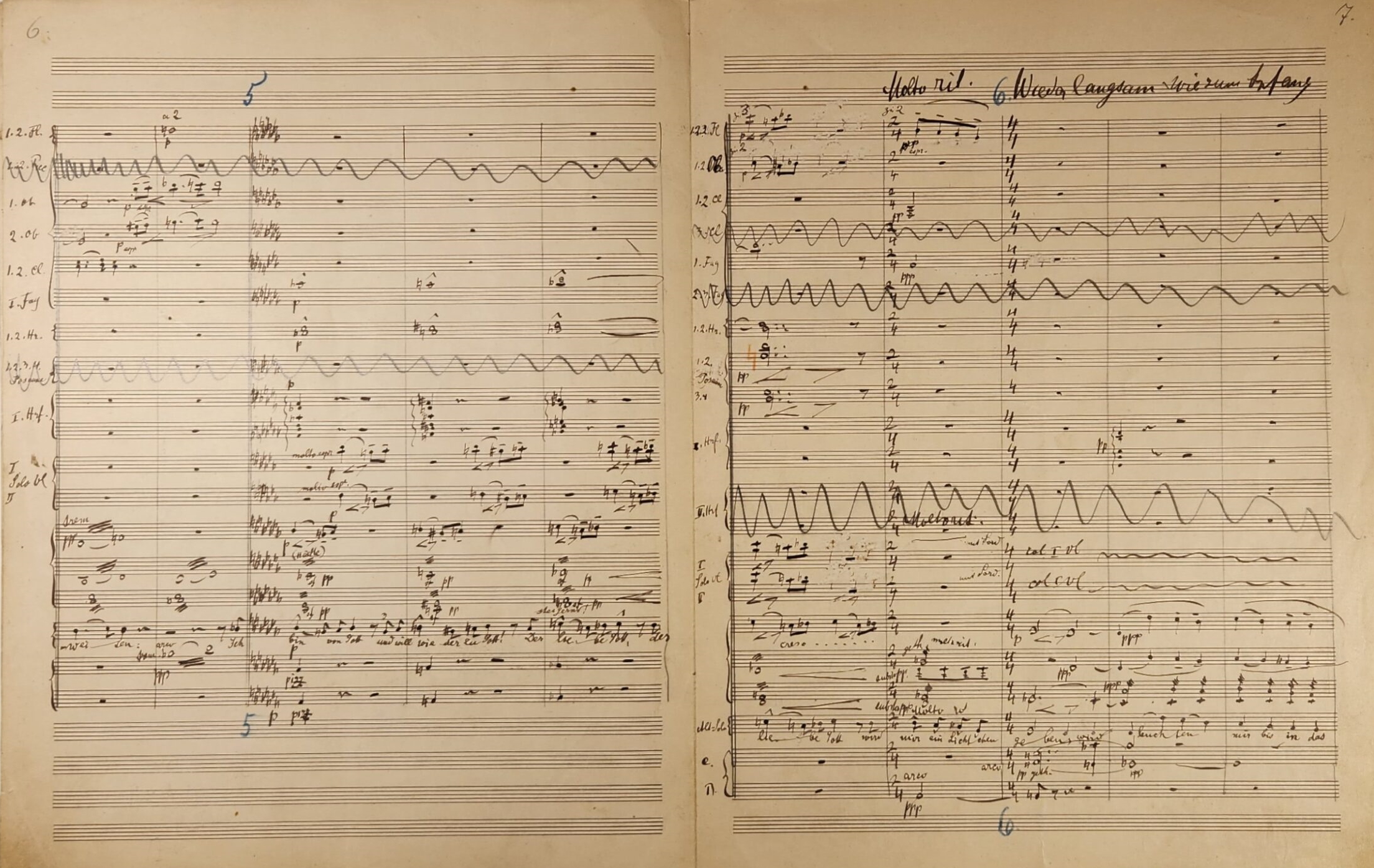
Sample pages

Sample pages Sample pages

Video

🎵 Request digital parts

The parts for this work are not yet available as digital files. You can request digitization here. Please briefly indicate which parts you need and by when they should be delivered. Please note that we explicitly cannot guarantee the delivery of digital parts. You will be promptly informed about the planned availability.

ⓘ PLEASE NOTE THAT DIGITAL PARTS ARE ONLY AVAILABLE IN ADDITION TO PRINTED PARTS.

Please log in to submit a request.