Fast delivery within 24 hours Integrated customer cloud for digital parts Over 2,000 orchestral works in the catalogue Personal advice — orch@bnote.de SOS +++ EMERGENCY PARTS SERVICE Distribution for renowned partner publishers Online tool for pre-print string annotations Fast delivery within 24 hours Integrated customer cloud for digital parts Over 2,000 orchestral works in the catalogue Personal advice — orch@bnote.de SOS +++ EMERGENCY PARTS SERVICE Distribution for renowned partner publishers Online tool for pre-print string annotations
🔑 Log in 📝 Become a customer
Kat. #BO-6650  ·  B-NOTE
Editions & prices
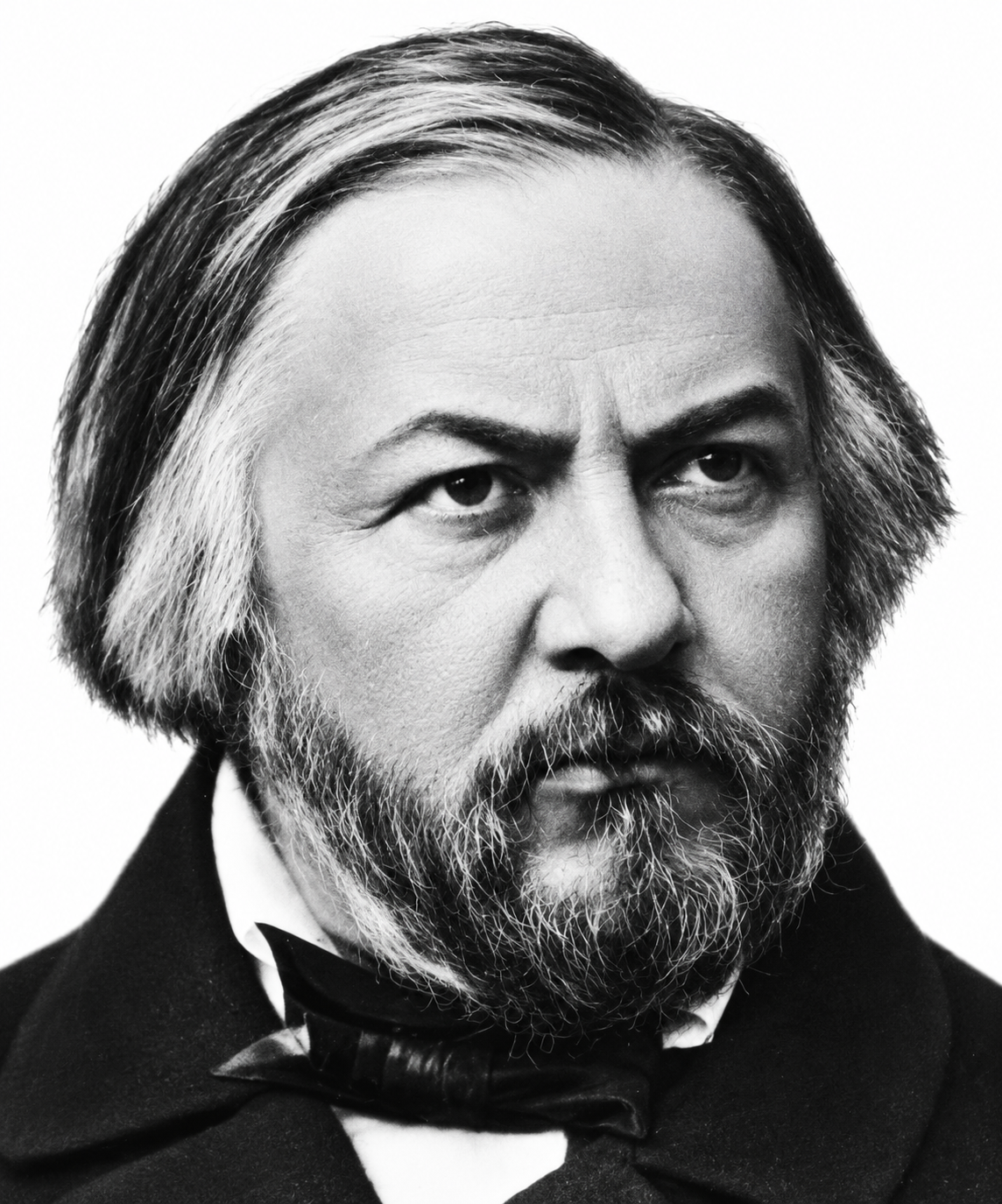
Glinka, Michail

Ouverture from „A Life for the Tsar“

B-Note says:“With A Life for the Tsar in 1836, Glinka laid the foundation for Russian opera as a major art form in the Western European tradition.”
Key
G minor
Composed
1834–1836
Duration
ca. 8:15 min
First publisher
Breitkopf & Härtel
Instrumentation
2.2.2.2 / 4.2.3.0 / timp, str i
Woodwinds
Flutes2
Oboes2
Clarinets2
Bassoons2
Brass
Horns4
Trumpets2
Trombones3
Tuba0
Further timp Timpani · str Strings
Orchestra
Symphony orchestra
Your orchestra Available to registered customers only i Your orchestra Save your orchestra’s line-up once – by drag & drop or from a template, from chamber to full symphony orchestra. Fits – no extra players needed Nearly – additionally: 1 harp 5 extra players needed Every work page then shows at a glance whether the work fits your orchestra and which extra players you would need. Several orchestras and project line-ups are possible. The catalogue is aimed at orchestras and ensembles – once logged in, the feature is available under "My orchestra". Log in →

Mikhail Glinka is regarded as the founder of Russian national opera. With “A Life for the Tsar” (1836), he created the first major Russian music drama to consistently unite folk-inspired melody and Slavic musical idiom with the formal conventions of the Western European operatic tradition. The overture to this work stands programmatically at the threshold of an entire era: it not only opens the opera but marks, in equal measure, the beginning of an independent Russian art music.

In terms of sound, the overture combines festive grandeur with lyrical warmth. The strings carry melodic ideas of broad, songlike character, while brass and timpani lend the whole a sense of dignity and weight. The woodwinds introduce bright, folk-song-like colours. The scoring — double woodwind quartet, four horns, two trumpets, and three trombones — conforms to the Classical-Romantic standard and allows for a full-bodied, well-balanced orchestral effect.

Glinka's music is said to have struck his contemporaries as something fundamentally new — Russian in spirit and melody, yet equal to its Western models in compositional craftsmanship. The overture remains to this day one of the representative works of early Russian Romanticism, offering orchestras an entry point into this repertoire that is as accessible as it is sonically splendid.

„The main idea of the opera was to blend traditional national song with the contemporary style of music, and the success it achieved surpassed all my expectations.“
— Michail Glinka, „Zapiski" (Memoiren/Autobiographie), entstanden 1854–1855, postum veröffentlicht 1870; zitiert nach der deutschen Ausgabe: Glinka, Memoiren, hrsg. v. Richard Petzoldt, Leipzig 1961
Date
27. November 1836
Venue
Sankt Petersburg, Kaiserliches Bolschoi-Theater (Kamenny-Theater)
Conductor
Catterino Cavos
Orchestra
Orchester des Kaiserlichen Bolschoi-Theaters Sankt Petersburg
The overture to "A Life for the Tsar" was first performed as part of the world premiere of Glinka's opera of the same name on November 27, 1836 (Julian calendar; December 9, 1836 by the Gregorian calendar). The opera is considered the first major Russian-language opera in the Western European tradition and laid the foundation for the Russian national opera. Notably, the conductor at the premiere, Catterino Cavos, had himself composed an opera on the same subject a few years earlier, based on the peasant hero Ivan Susanin, and withdrew it in favor of Glinka's work - an exceptional act of collegial generosity. Tsar Nicholas I attended the premiere and is said to have personally suggested the title "A Life for the Tsar"; Glinka had originally intended to call the work "Ivan Susanin," the title under which it was indeed performed during the Soviet era.

Editions available

Item no. Description Price (incl. 7% VAT)
BO-6650.00Full score
€ 29,80
BO-6650.10Set of parts with strings 5.4.3.2.2
€ 80,00
🎵 Digital options

Digital parts for this edition are not yet available. Please log in to request digitization.

BO-6650.21Extra Str. Vl.1€ 2,90
BO-6650.22Extra Str. Vl.2€ 2,90
BO-6650.23Extra Str. Va.€ 2,90
BO-6650.24Extra Str. Vc.€ 2,90
BO-6650.25Extra Str. Bass€ 2,90

Sample pages

Sample pages Sample pages

Video

More by Michail Glinka

🎵 Request digital parts

The parts for this work are not yet available as digital files. You can request digitization here. Please briefly indicate which parts you need and by when they should be delivered. Please note that we explicitly cannot guarantee the delivery of digital parts. You will be promptly informed about the planned availability.

ⓘ PLEASE NOTE THAT DIGITAL PARTS ARE ONLY AVAILABLE IN ADDITION TO PRINTED PARTS.

Please log in to submit a request.