Fast delivery within 24 hours
Integrated customer cloud for digital parts
Over 2,000 orchestral works in the catalogue
Personal advice — orch@bnote.de SOS +++ EMERGENCY PARTS SERVICE
Distribution for renowned partner publishers
Online tool for pre-print string annotations
Fast delivery within 24 hours
Integrated customer cloud for digital parts
Over 2,000 orchestral works in the catalogue
Personal advice — orch@bnote.de SOS +++ EMERGENCY PARTS SERVICE
Distribution for renowned partner publishers
Online tool for pre-print string annotations
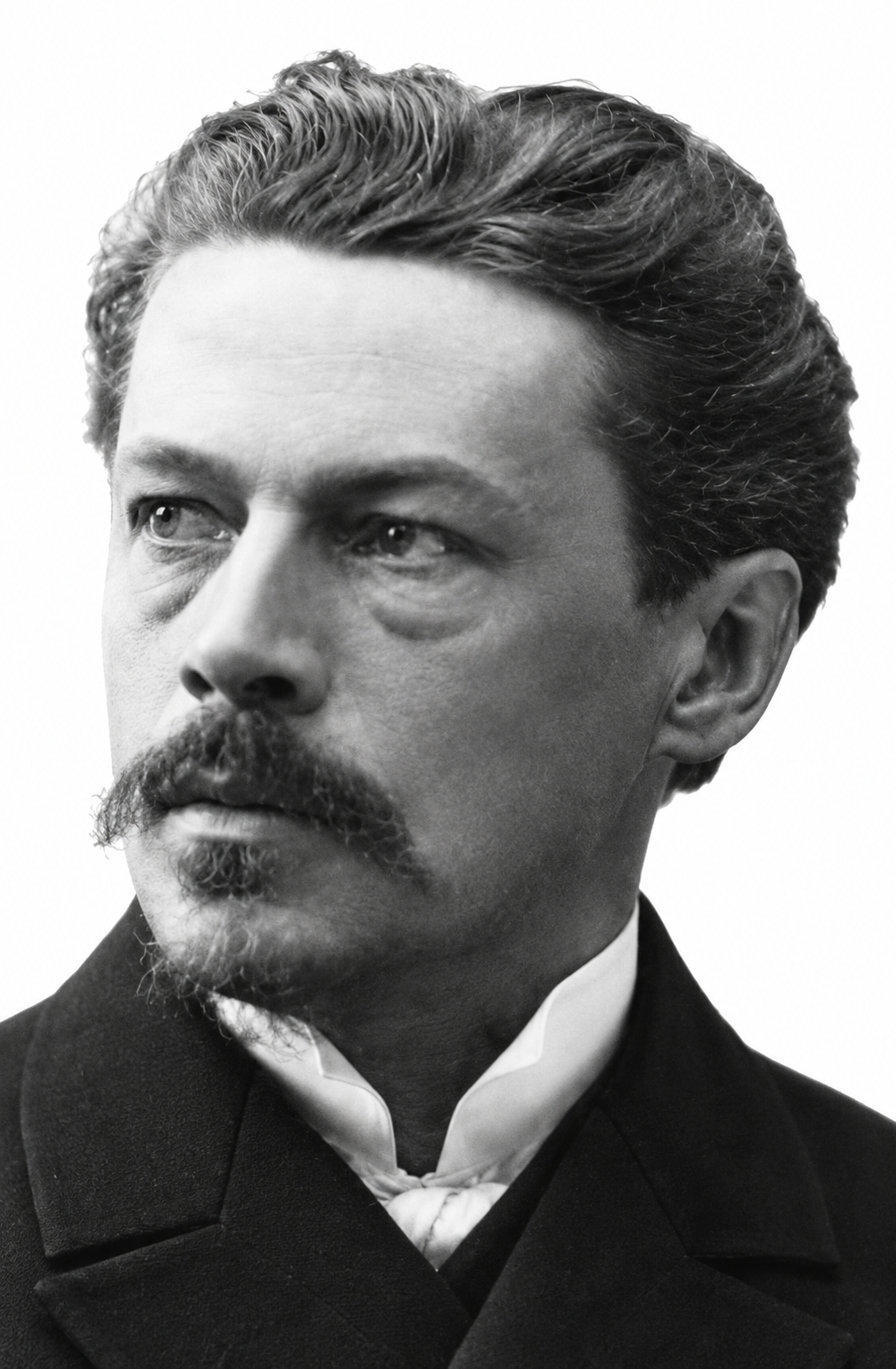
Short biography Anton Stepanovich Arensky was born on 12 July 1861 in Novgorod, Russia. He studied at the St Petersburg Conservatoire, where he was a pupil of Nikolai Rimsky-Korsakov. From 1882 he taught at the Moscow Conservatoire as Professor of Harmony and Counterpoint. Between 1895 and 1901 he directed the Imperial Russian Court Chapel in St Petersburg. He died on 25 February 1906 in Terioki (Finland, at the time part of the Russian Empire) from tuberculosis.
Historical placement Arensky belongs to the late Russian Romantic tradition of the closing decades of the nineteenth century. His style combines lyrical melody with an elegant harmonic language, shaped by the influence of Tchaikovsky and Western European Romanticism. He is regarded as a significant exponent of the Russian salon style, whose works — particularly his chamber music and piano pieces — enjoyed wide circulation in his lifetime, though they fell out of the repertoire during the twentieth century.
Personal connections Nikolai Rimsky-Korsakov was Arensky's composition teacher at the St Petersburg Conservatoire. Pyotr Ilyich Tchaikovsky, as an older contemporary, exerted a formative stylistic influence on Arensky. Sergei Rachmaninoff and Alexander Scriabin were among Arensky's pupils at the Moscow Conservatoire. The cellist and composer Alexander Glazunov was a contemporary with whom Arensky came into contact in Russian musical life, though the precise nature of their personal relationship is not established.
Important works
Klaviertrio d-Moll – Piano Trio (op. 32, 1894)
Streichquartett Nr. 2 a-Moll – String Quartet (op. 35, 1894)
Sonate für Violine und Klavier a-Moll – Sonata (op. 6)
Variations on a Theme of Tchaikovsky – String Orchestra (op. 35a, arrangement from Streichquartett Nr. 2)
Suite Nr. 1 für zwei Klaviere – Piano Suite (op. 15)
Suite Nr. 2 „Silhouettes" für zwei Klaviere – Piano Suite (op. 23)
Suite Nr. 3 „Variations" für zwei Klaviere – Piano Suite (op. 33)
Fantasie über Themen von Ryabinin für Klavier und Orchester – Concert Fantasia (op. 48)
Son u Volgi („Ein Traum an der Wolga") – Opera (op. 16, 1888)
Rafalʼ – Opera (op. 38, 1894)