Fast delivery within 24 hours
Integrated customer cloud for digital parts
Over 2,000 orchestral works in the catalogue
Personal advice — orch@bnote.de SOS +++ EMERGENCY PARTS SERVICE
Distribution for renowned partner publishers
Online tool for pre-print string annotations
Fast delivery within 24 hours
Integrated customer cloud for digital parts
Over 2,000 orchestral works in the catalogue
Personal advice — orch@bnote.de SOS +++ EMERGENCY PARTS SERVICE
Distribution for renowned partner publishers
Online tool for pre-print string annotations
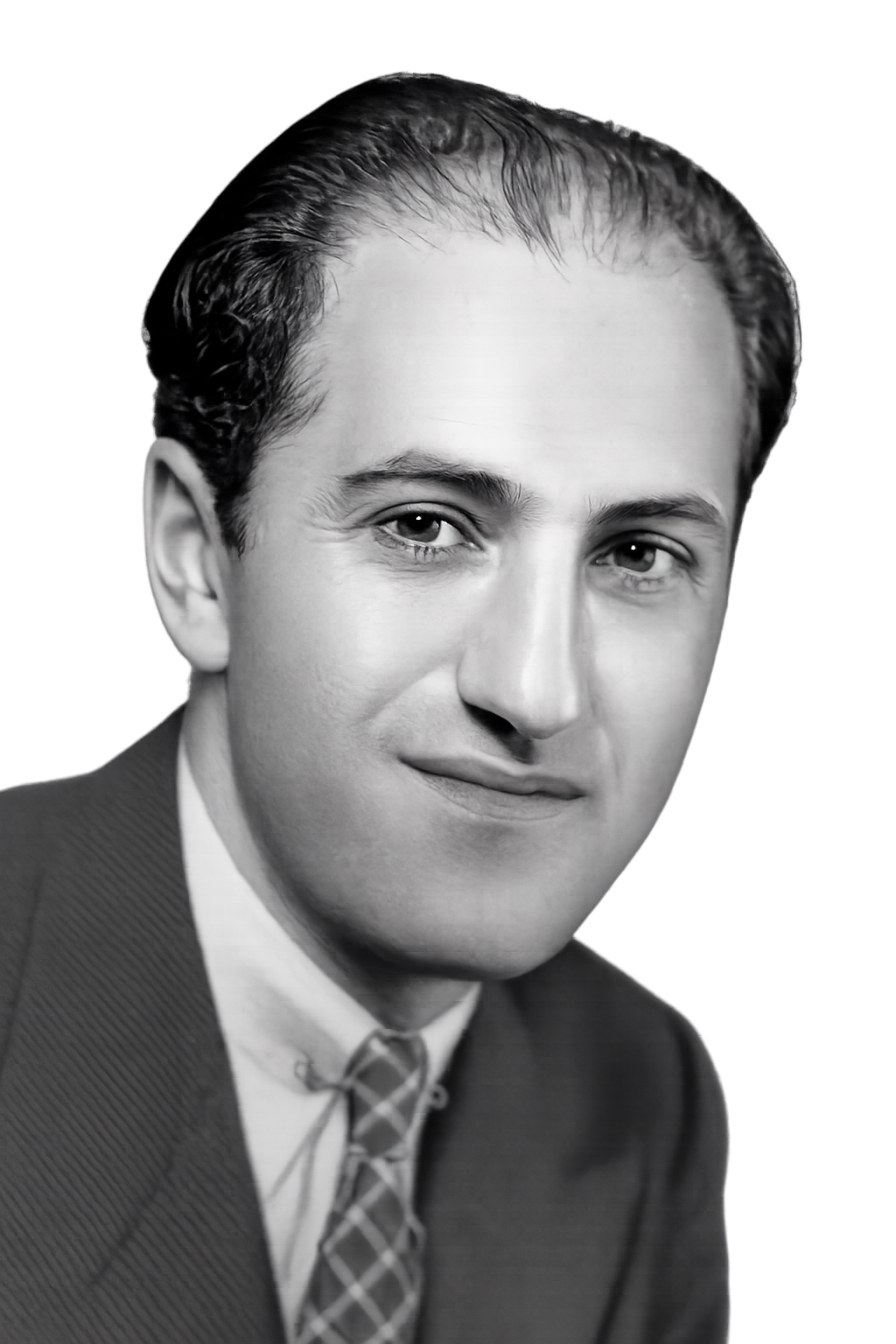
Short biography George Gershwin (1898-1937) was an American composer born in Brooklyn, New York, to Russian Jewish immigrant parents. He began his musical career as a song plugger on Tin Pan Alley at age 15 and had little formal musical training in his early years. Gershwin achieved success as both a popular songwriter and composer of concert works, uniquely bridging the gap between commercial and classical music. He died tragically young at age 38 from a brain tumor in Hollywood, California.
Historical placement Gershwin was a key figure in American music of the 1920s and 1930s, working during the Jazz Age and early sound film era. His music synthesized elements of jazz, blues, ragtime, and classical music, creating a distinctly American sound that influenced both popular and concert music. He played a crucial role in establishing American musical theater as an art form and in bringing jazz idioms into the concert hall.
Personal connections He studied composition with Joseph Schillinger, a music theorist who helped him develop his harmonic language. His brother Ira Gershwin was his primary lyricist and collaborator on most of his songs and musical theater works. He worked closely with orchestrator Ferde Grofé on several major works including Rhapsody in Blue.
Important works
Rhapsody in Blue – Concert work for piano and orchestra (1924)
Concerto in F – Piano concerto (1925)
An American in Paris – Orchestral tone poem (1928)
Second Rhapsody - for piano and orchestra (1931)
Cuban Overture – Orchestral work (1932)
Variations on "I Got Rhythm" – for piano and orchestra (1934)
Porgy and Bess – Opera (1935)