Fast delivery within 24 hours
Integrated customer cloud for digital parts
Over 2,000 orchestral works in the catalogue
Personal advice — orch@bnote.de SOS +++ EMERGENCY PARTS SERVICE
Distribution for renowned partner publishers
Online tool for pre-print string annotations
Fast delivery within 24 hours
Integrated customer cloud for digital parts
Over 2,000 orchestral works in the catalogue
Personal advice — orch@bnote.de SOS +++ EMERGENCY PARTS SERVICE
Distribution for renowned partner publishers
Online tool for pre-print string annotations
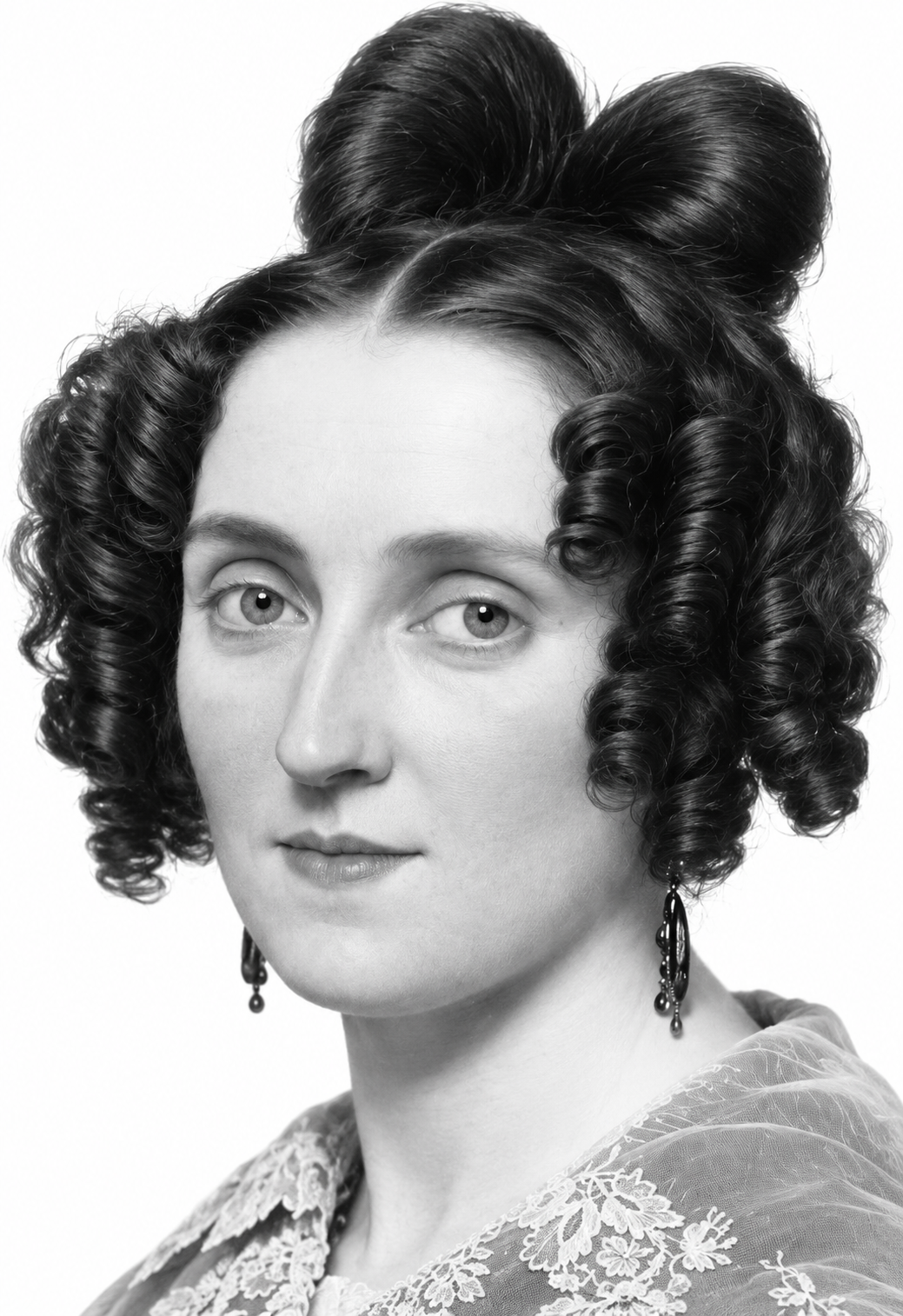
Short biography Louise Farrenc was born Jeanne-Louise Dumont on 31 May 1804 in Paris, where she died on 15 September 1875. She came from an artistic family and received a thorough musical education from an early age, initially as a pianist. She studied composition under Anton Reicha at the Paris Conservatoire, where from 1842 she herself held a professorship in piano – a post she retained until 1873, making her one of the few women of her era to hold a permanent professorship at a major European music institution. Her husband, Aristide Farrenc, was a flautist, music publisher, and co-editor of the encyclopaedic work *Le Trésor des pianistes*, to which Louise made a substantial contribution.
Historical placement Louise Farrenc belongs to the Romantic era, though her compositional style displays markedly Classical traits and is characterised by a contrapuntal and formal rigour reminiscent of such models as Beethoven and Schubert. Within the history of nineteenth-century French music she occupies a singular position, in that she – unlike many of her contemporaries – cultivated large-scale instrumental music such as symphonies and chamber music at a time when opera dominated in France. Music historians have recognised her contribution to the rehabilitation of absolute instrumental music in France as of considerable significance.
Personal connections Anton Reicha was her composition teacher at the Paris Conservatoire. Aristide Farrenc, her husband, was a flautist and publisher; together they edited the extensive historical anthology *Le Trésor des pianistes*. Ignaz Moscheles and Johann Nepomuk Hummel are cited in the literature as pianistic influences and occasional teachers during her early training (the precise nature of these teaching relationships has not been fully established).
Important works
Symphonie Nr. 1 e-Moll – symphony (op. 32, 1841)
Symphonie Nr. 2 D-Dur – symphony (op. 35, 1845)
Symphonie Nr. 3 g-Moll – symphony (op. 36, 1847)
Nonett Es-Dur – chamber music for wind and strings (op. 38, 1849)
Klavierquintett a-Moll – chamber music (op. 30, 1839)
Klavierquintett e-Moll – chamber music (op. 31, 1840)
Klaviertrio e-Moll – chamber music (op. 33, 1844)
Sonate für Violine und Klavier C-Dur – chamber music (op. 37, 1848)
30 Etudes für Klavier – piano work (op. 26, before 1840)
Variations pour piano – piano work (several sets, op. 25 and others)